M.E.D.I.T.erraNew - just integration
The MediterraNEW Project
THE MEDITERRANEW PROJECT:
_________________________
The European Union promotes cooperation between countries bordering the Mediterranean, with a particular focus on younger generations, who often lack prospects and means of subsistence.
The United Word Foundation had the opportunity to participate, together with other organisations, in a joint EU-funded project that strengthend the younger generations in their countries of origin and brought together the methodologies of the partners - and finally integrated them into interdisciplinary modules in an online tool.
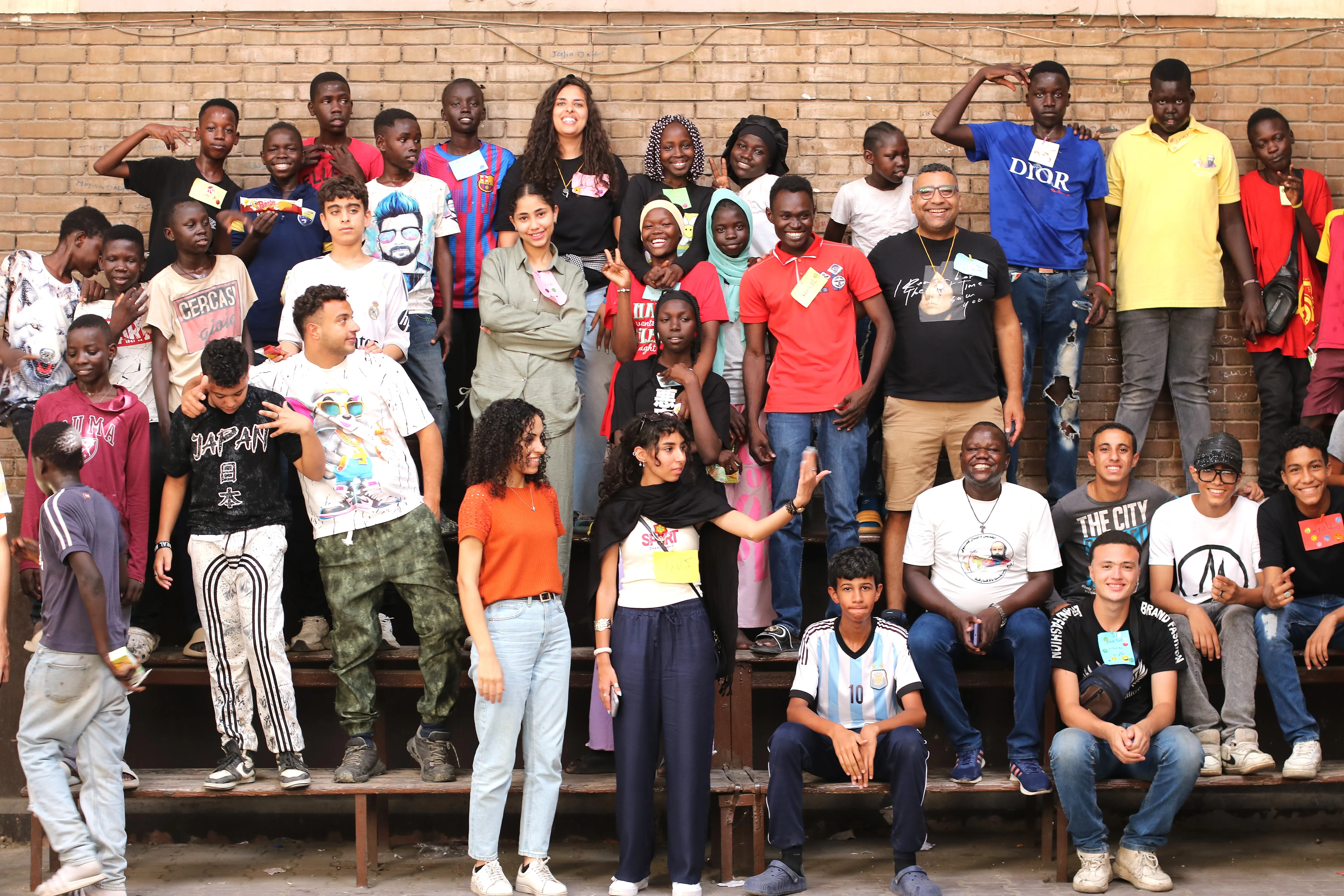
With around 100 young people from Cairo, Egyptians and young people from Sudan, South Sudan and Eritrea, a programm has been created. It promoted self-confidence, respect and appreciation for others and their cultures. Together, they discovered their own strengths and talents and those of others. Opportunities then opened up to use these talents in practical activities.
Here is the link to the multidisciplinary toolkit for educators working in multicultural Click here
Wall Painting
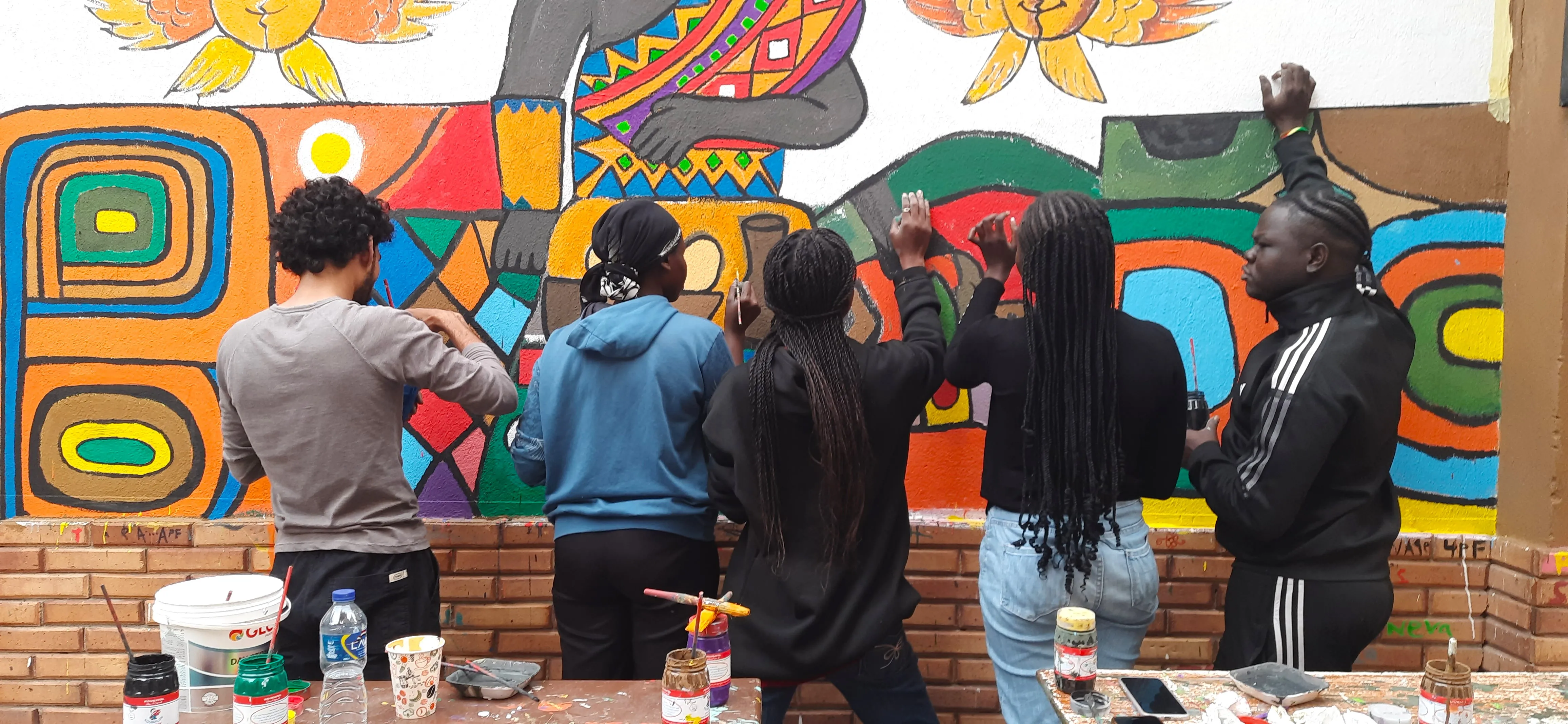
A Wall-Painting-Project born from an encounter between young people from Sudan, South Sudan and Egypt.
The idea came about in June 2024, during a meeting with an artist in Cairo: to create a mural together with young Sudanese people, right next to their school.
‘This is an educational project that is perfectly in line with MediterraNEW!’ we said to ourselves. No sooner said than done!
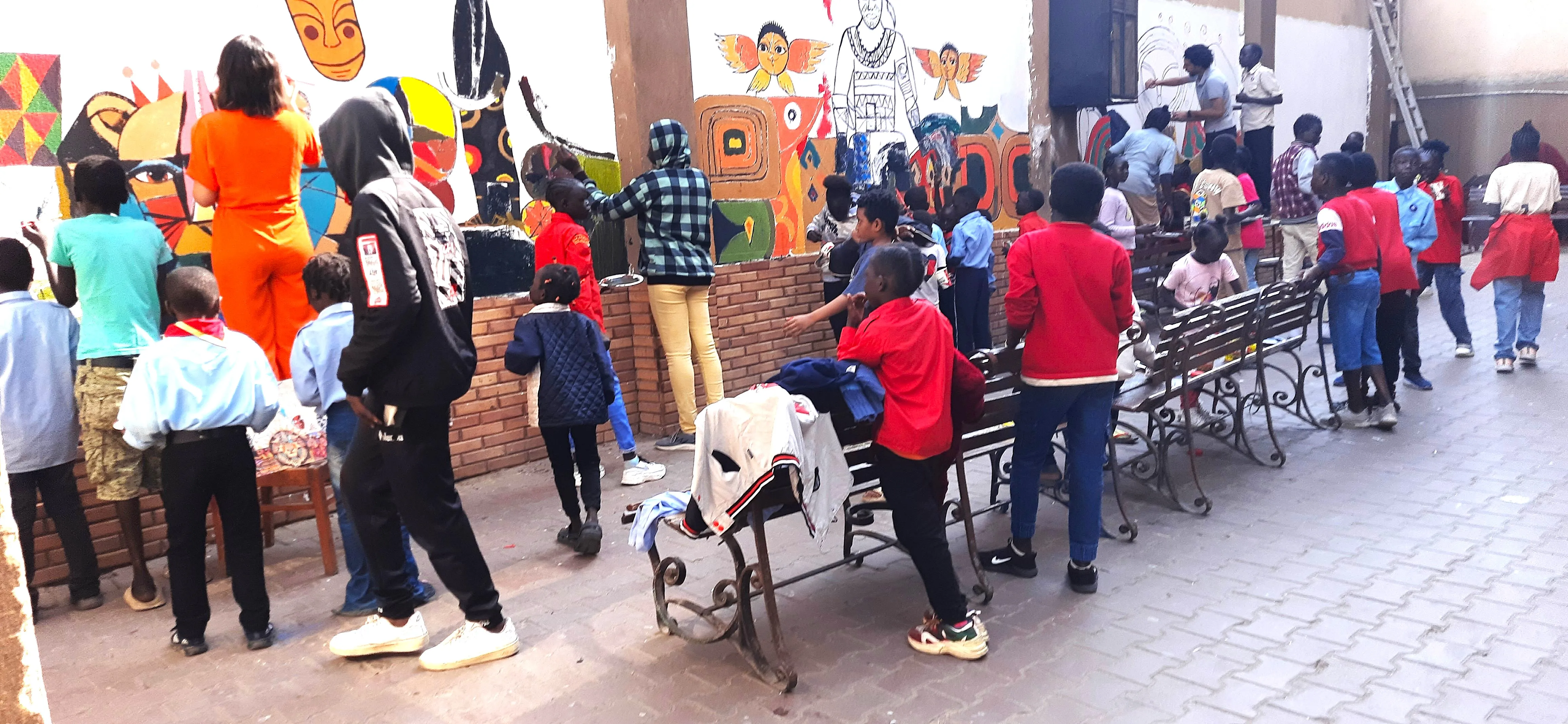
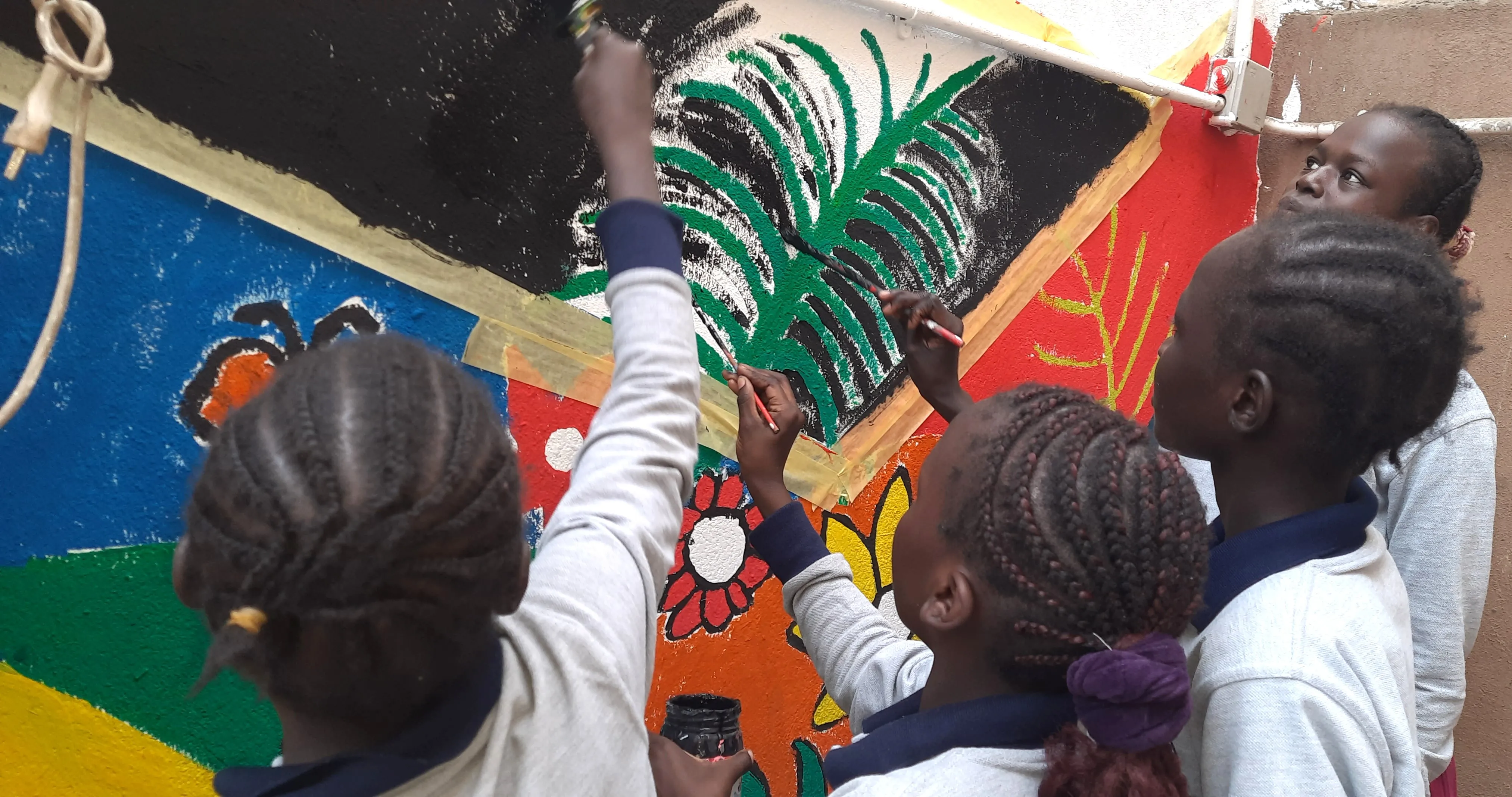
The artist proposed an idea, which he drew in two sessions. Then he left us free to express ourselves. With a group of young Sudanese and Egyptian people — including two art students, we continued the work. As the youth from Sudan saw what was emerging, more and more young people joined in. At times there were up to 40 people painting.
The initial design covered about two-thirds of the wall. Together we decided how to complete it: a typical Sudanese landscape and a lush forest populated by plants and animals.
It was amazing to see even the youngest children grappling with colours and brushes: they mixed the paints, chose a part to paint, helped each other — and sometimes added details on top of those already finished. But it didn't matter: the real magic was seeing them create together.
After more than a month and six days of work, the piece was complete. The youngest children were particularly proud to show off what they had achieved. Today, protected by a coat of varnish, the mural conveys joy and recounts a wonderful experience shared between Egyptians, Sudanese and South Sudanese.
Train the Trainers
The Train the Trainers program and subsequent training for adolescents from Egypt, Sudan, South Sudan and Eritrea.
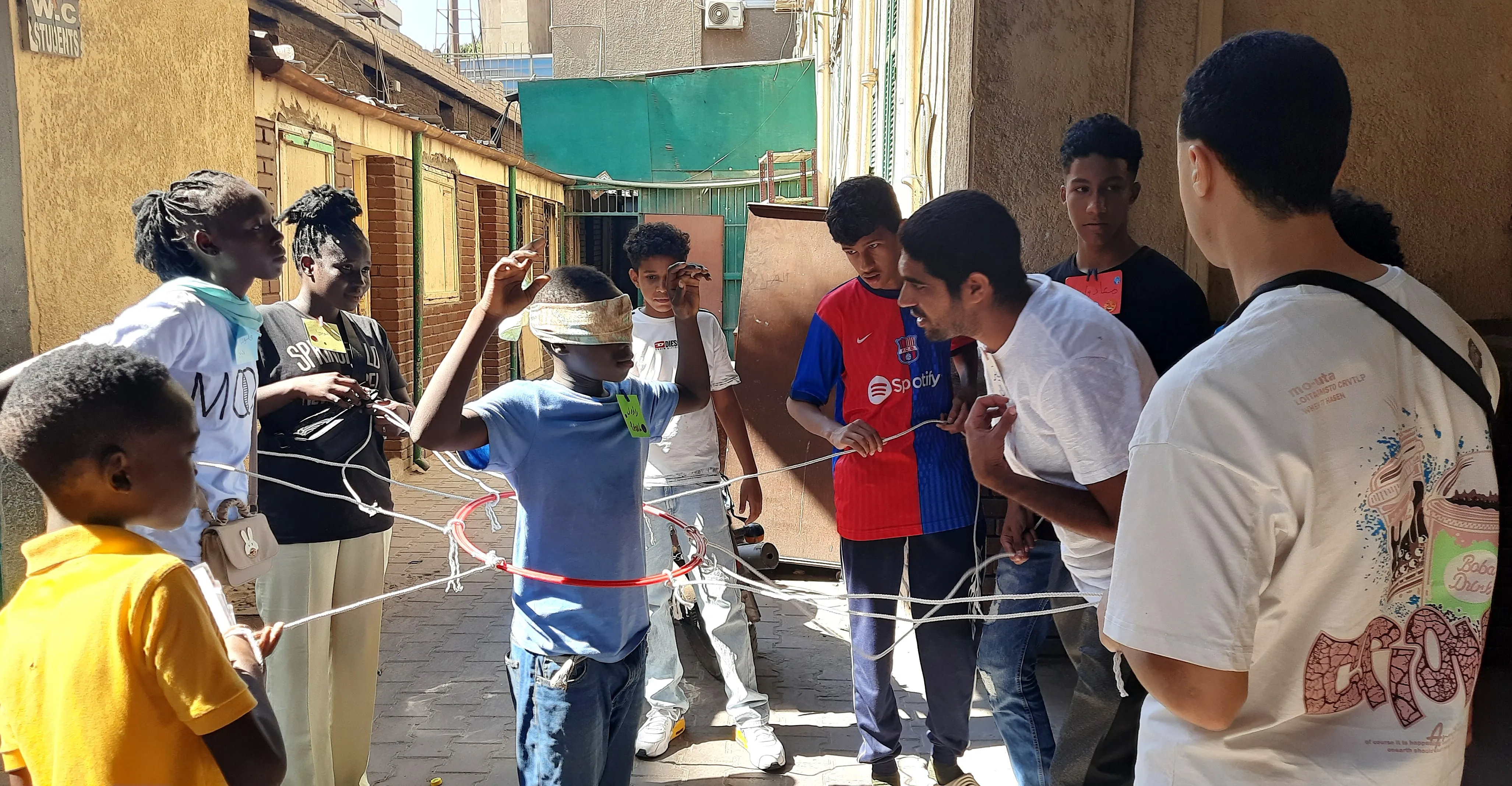
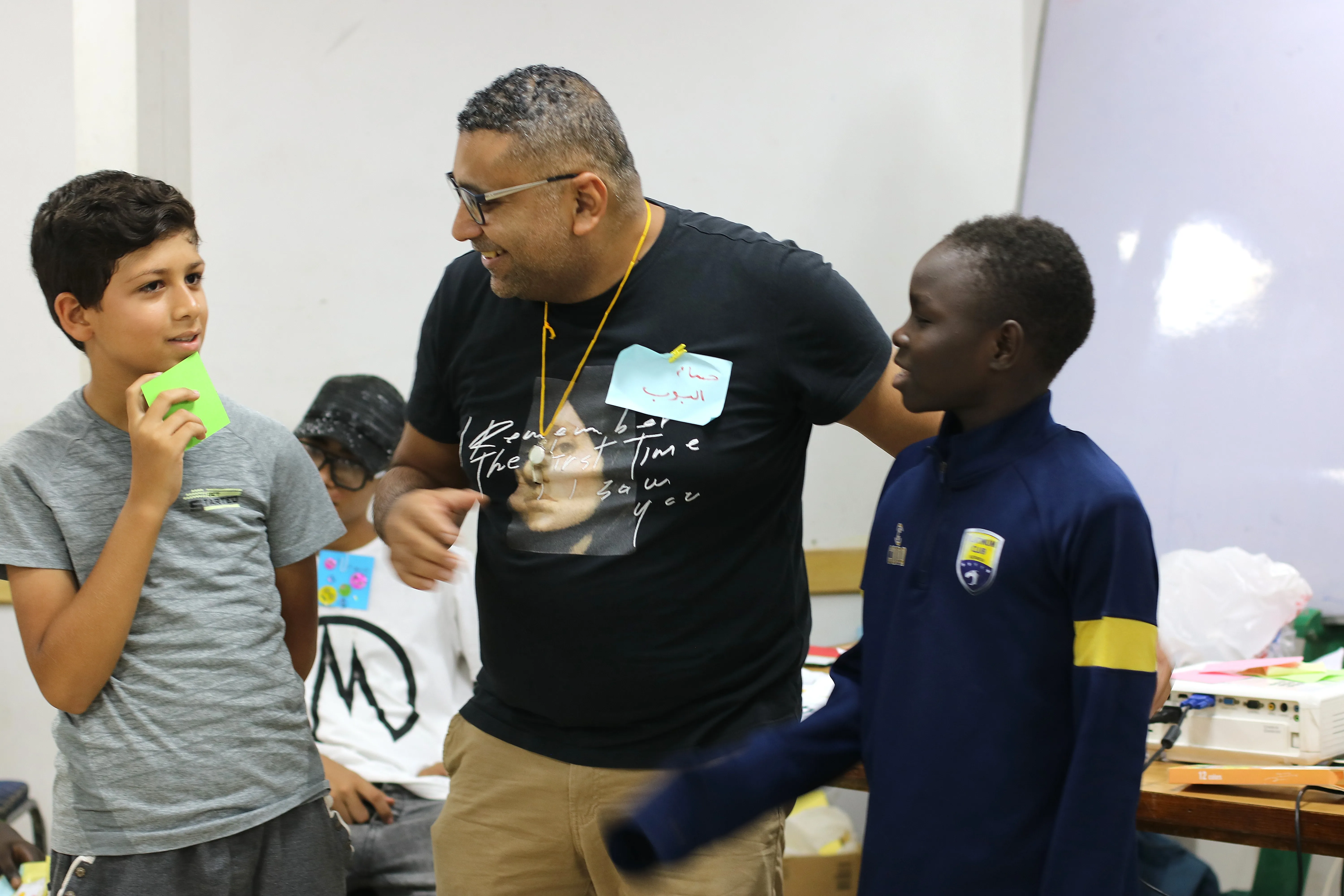
The project began with an 8-session Train the Trainers (TOT) program, which turned into a rich community experience. The main objective of the program was to provide trainers with the essential skills to design and deliver effective training programs for adolescents. This included the basics of learning design, the use of creative and critical thinking in the learning process, and the application of experiential learning methods.
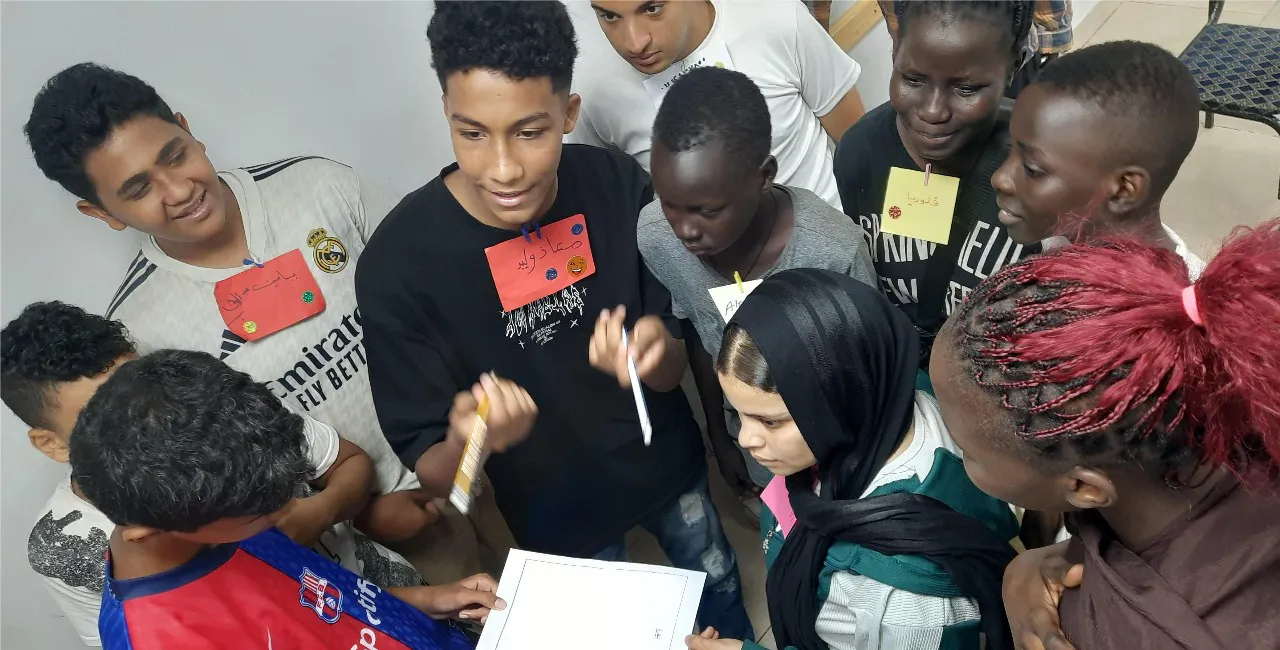
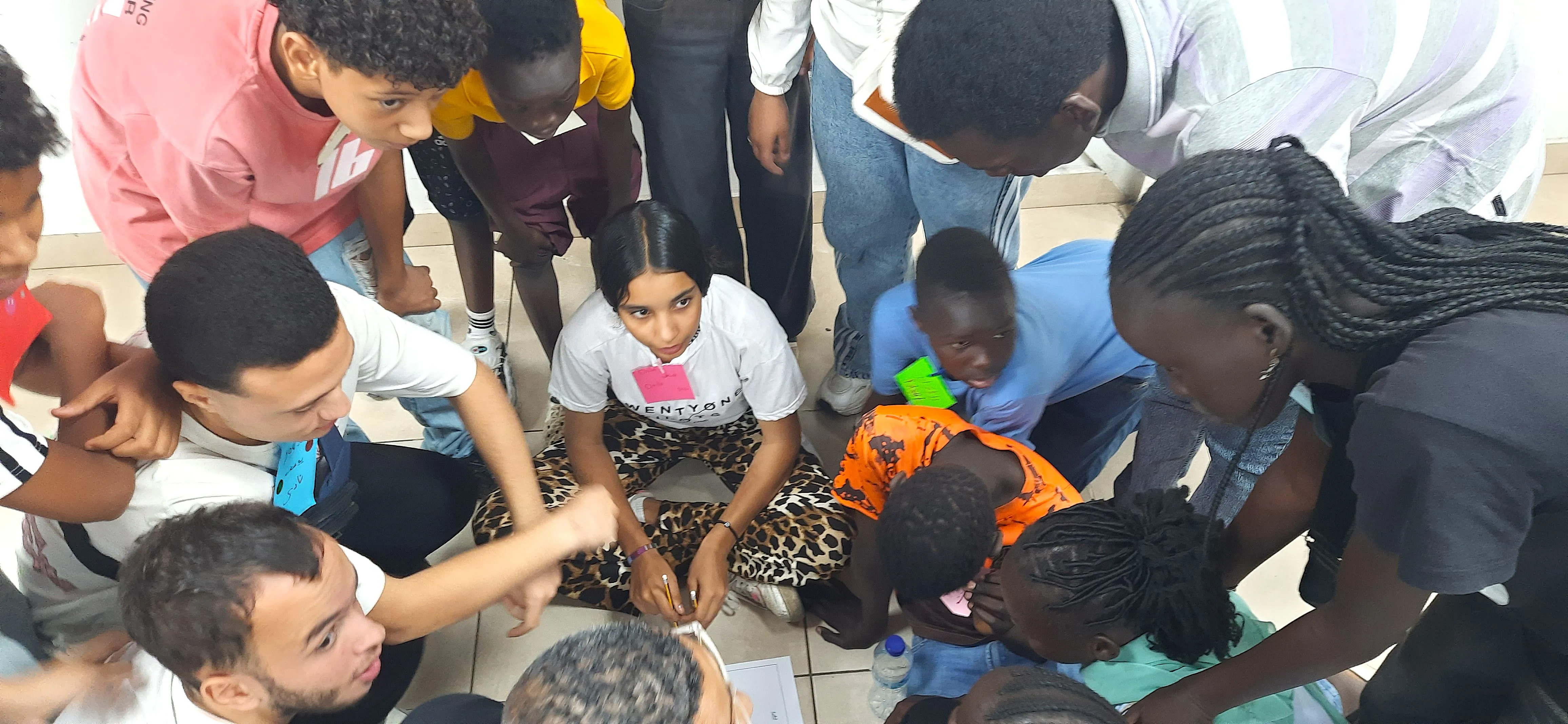
The first cycle of the following program for adolescents concluded after eight sessions. The participants, aged between 13 and 17, from Egypt, Sudan, South Sudan and Eritrea had what they themselves described as a “unique experience”.
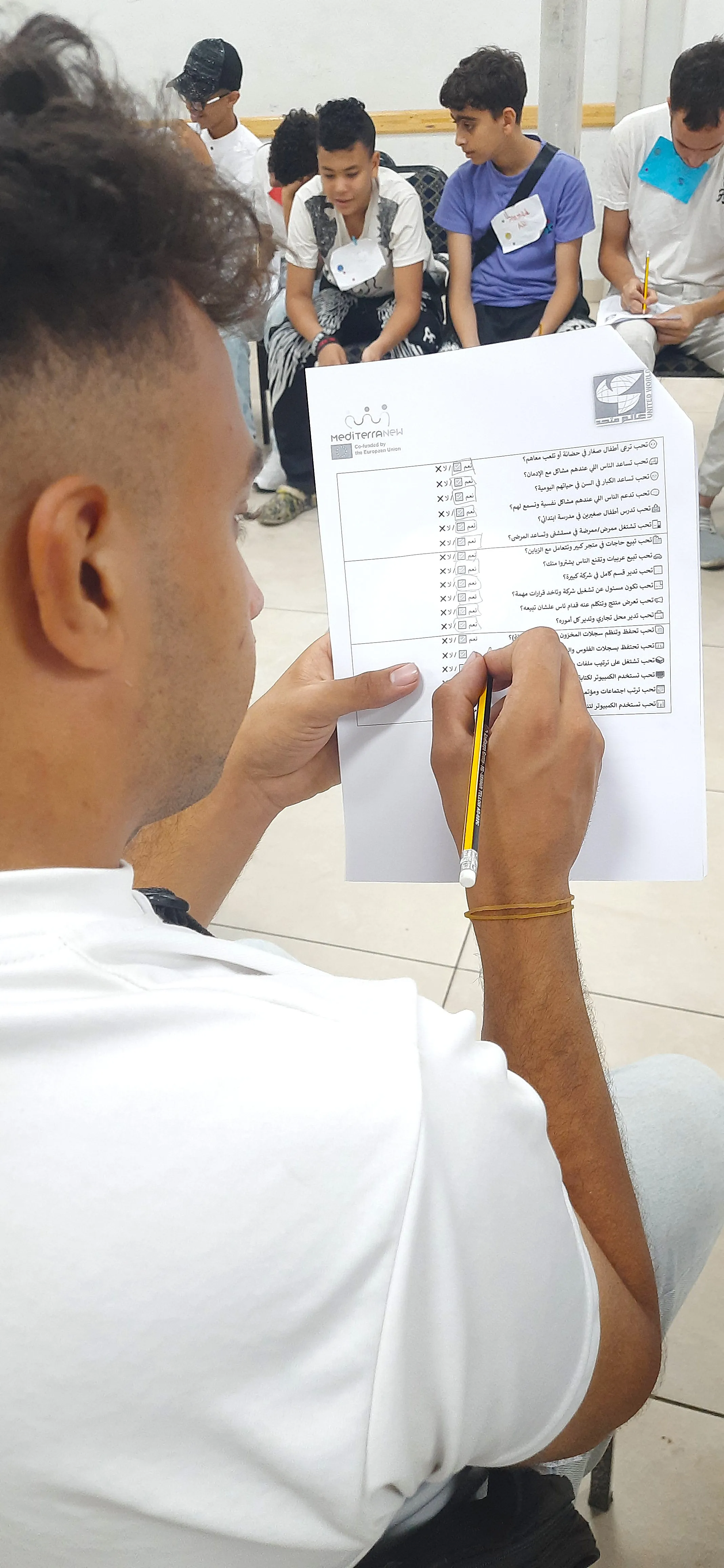
The program helped them explore topics such as discovering their personality, uniqueness, the power of conformity, meaning, motivation skills, emotional awareness, boundaries and belonging.
Educational objectives:
To provide humanistic education to a group of young refugees and Egyptians living in a critical social context, with few opportunities for human development:
• Encourage them to have confidence in themselves
• to accept others,
• to be able to express themselves well
• to discover their own limits and talents,
• to improve their decision-making skills in dialogue with friends and relatives
• to value the culture of others,
• to make friends with others who have a different culture.
• And finally, to open up the group to experience social service for others.
For children from Eritrea
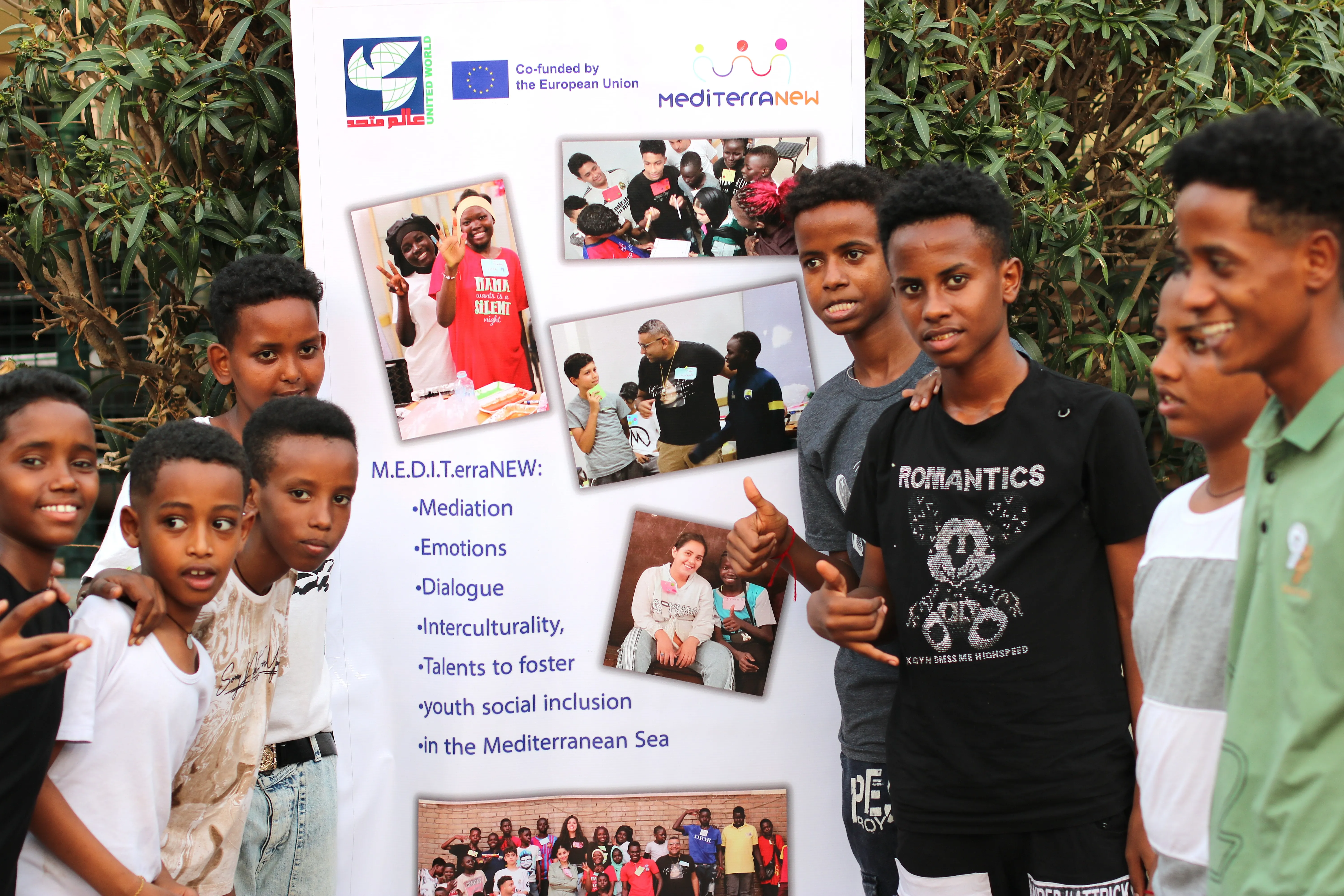
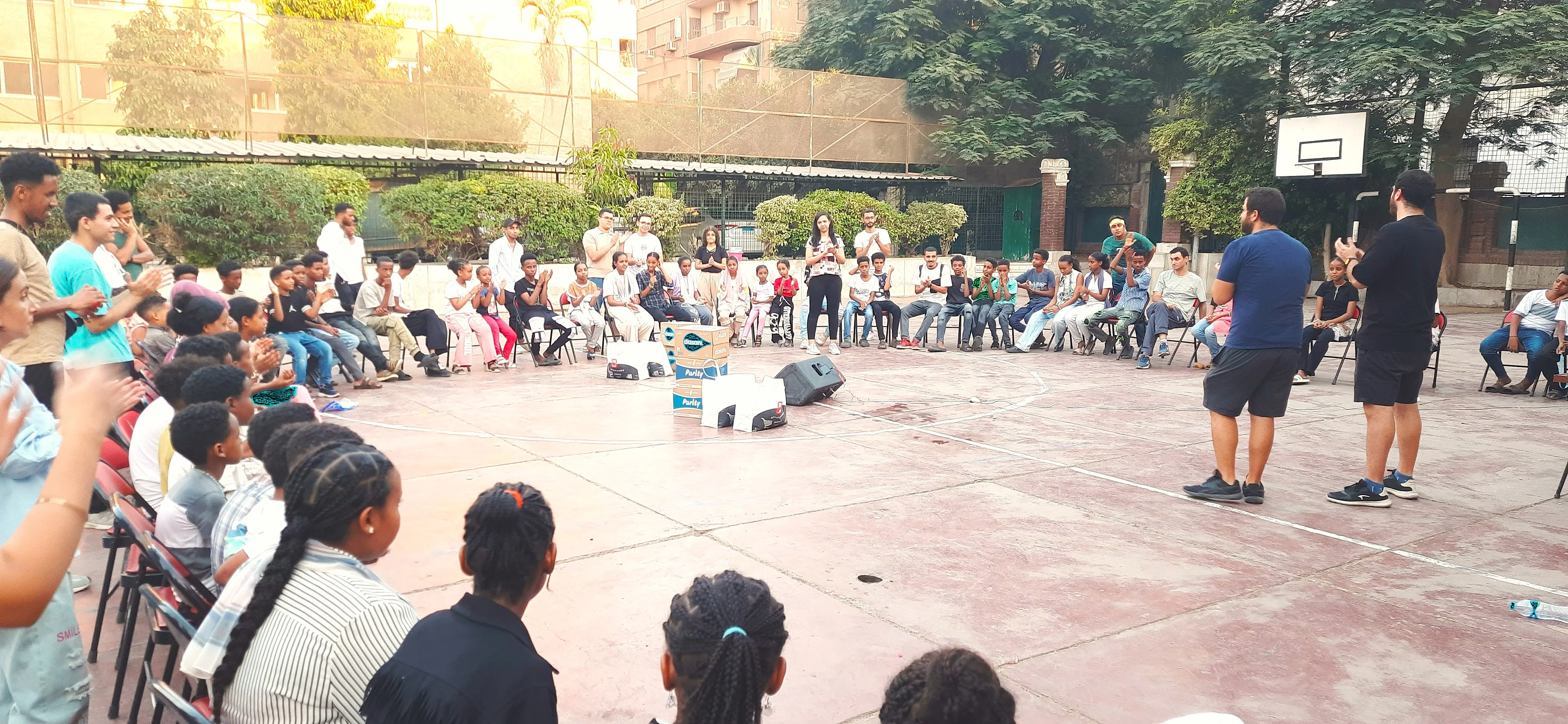
PROGRAM REALIZED WITH 30 VOLUNTEERS FOR 90 CHILDREN FROM ERITREA
• The Eritrean people in Egypt are marginalised twice: they are discriminated against because of their skin colour and because of their language. They usually speak neither English nor Arabic.
• In the last years a friendship has grown between United World Foundation and the comunity of the people from Eritrea. In mid-July, 30 young egyptians, all volunteers, arrived with different games, lunch bags and bottles of water to perform a program fort he children.
• Due to the high temperatures, many ways of playing with water were found. The 90 children and young people from Eritrea who were present enjoyed it very much. ‘It was a wonderful afternoon’ was the echo of the children. The volunteers thi day had the possibility to excercise what they have learnt in the training-sessions before.
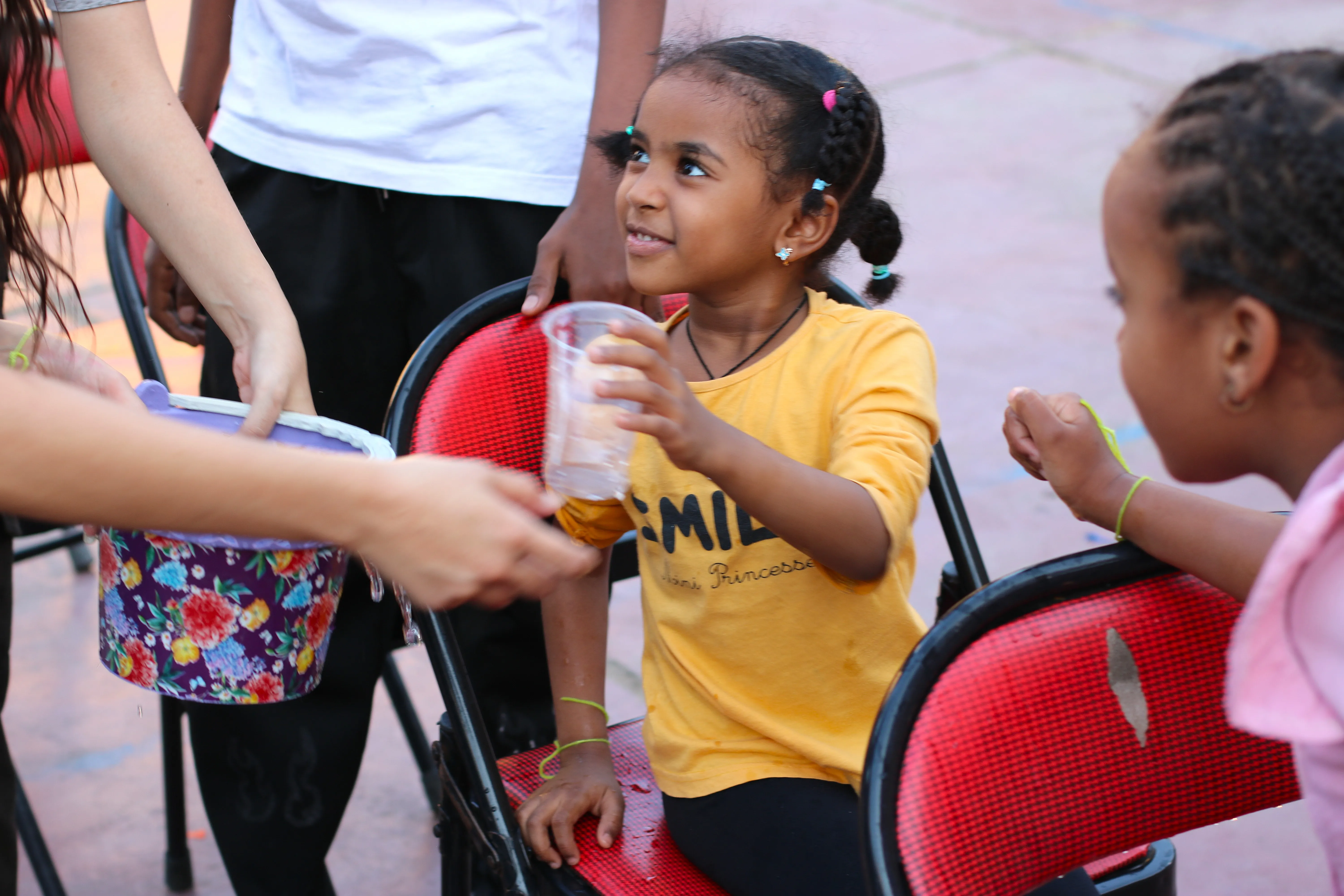
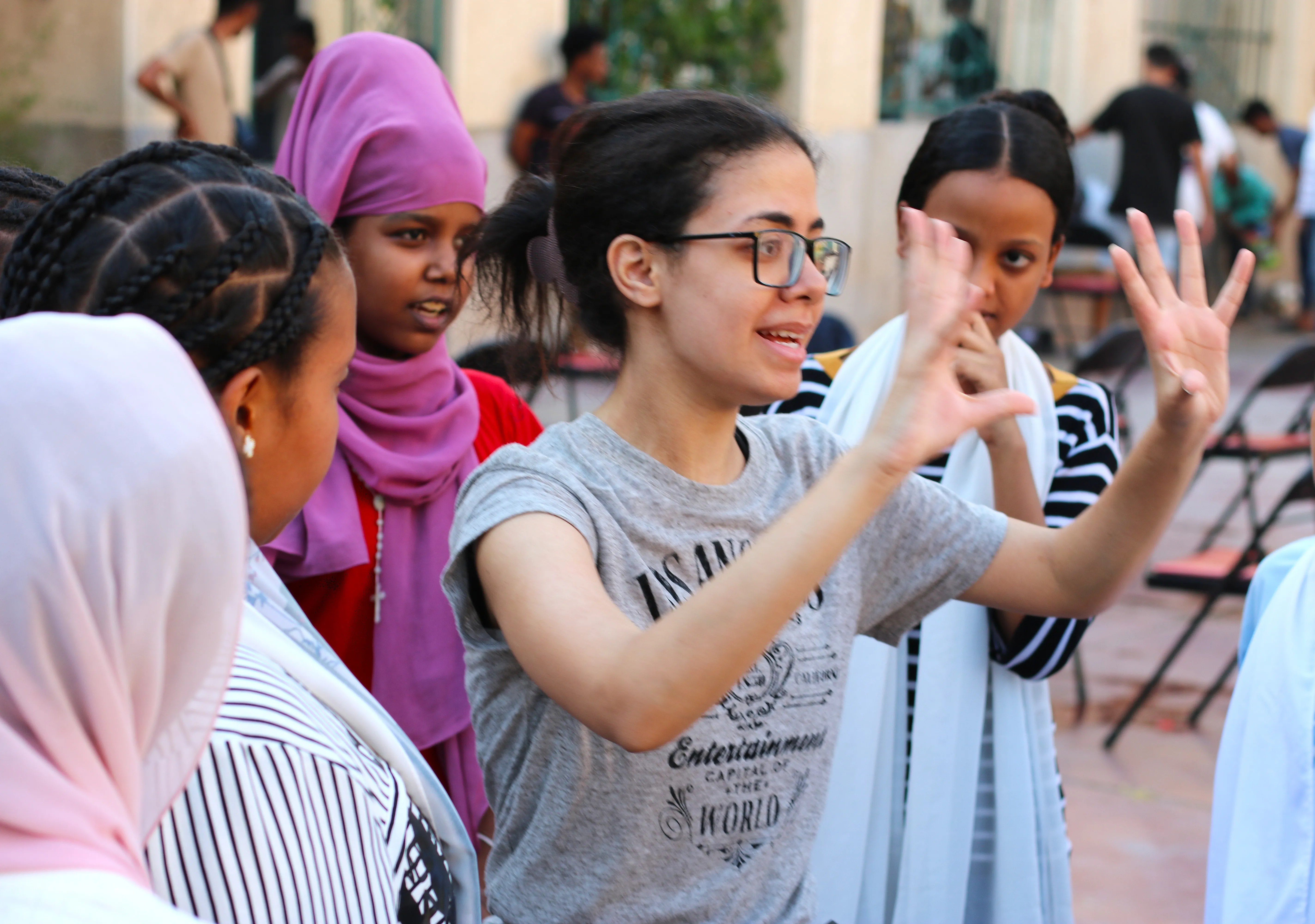
Workshop renewing old school desks
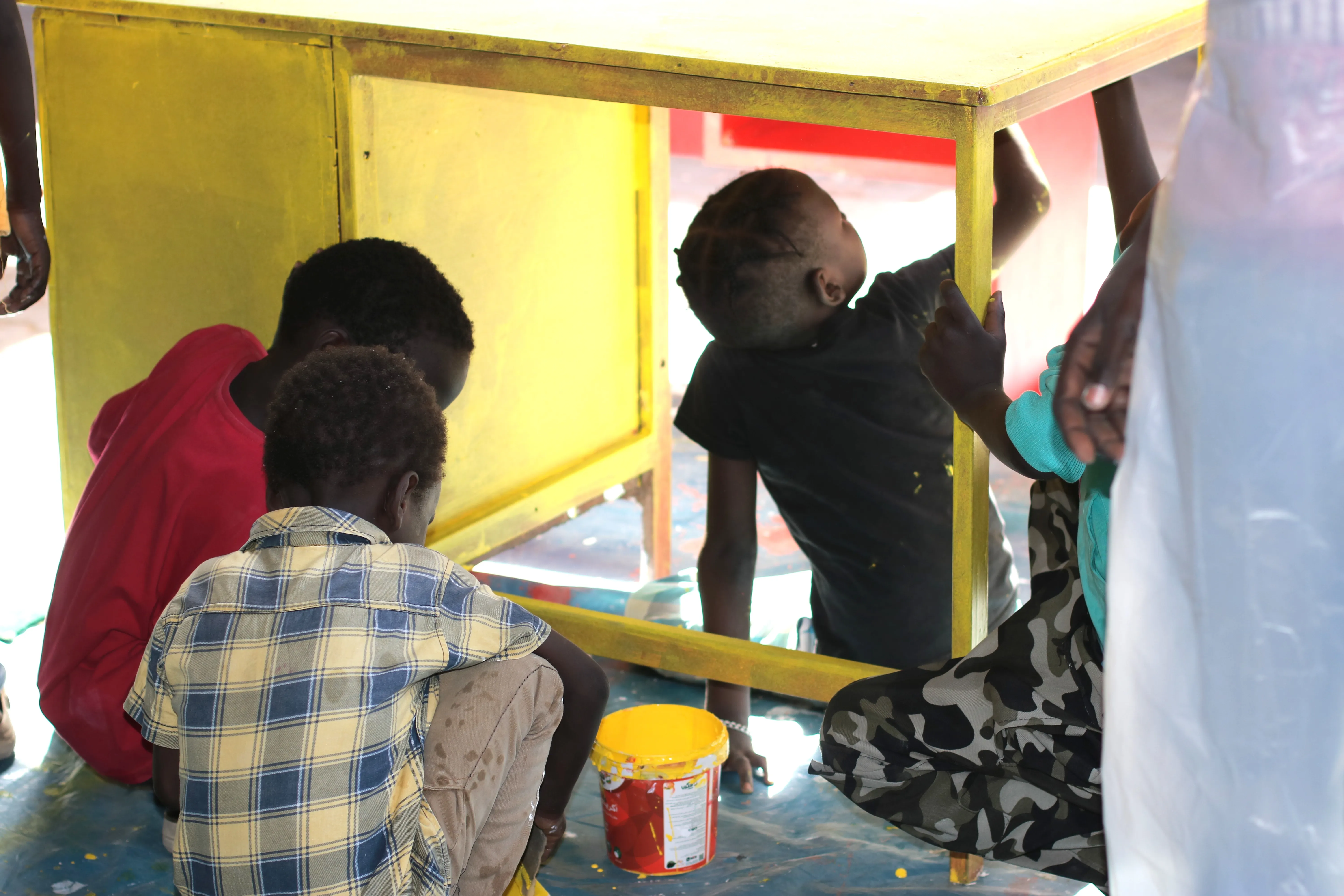
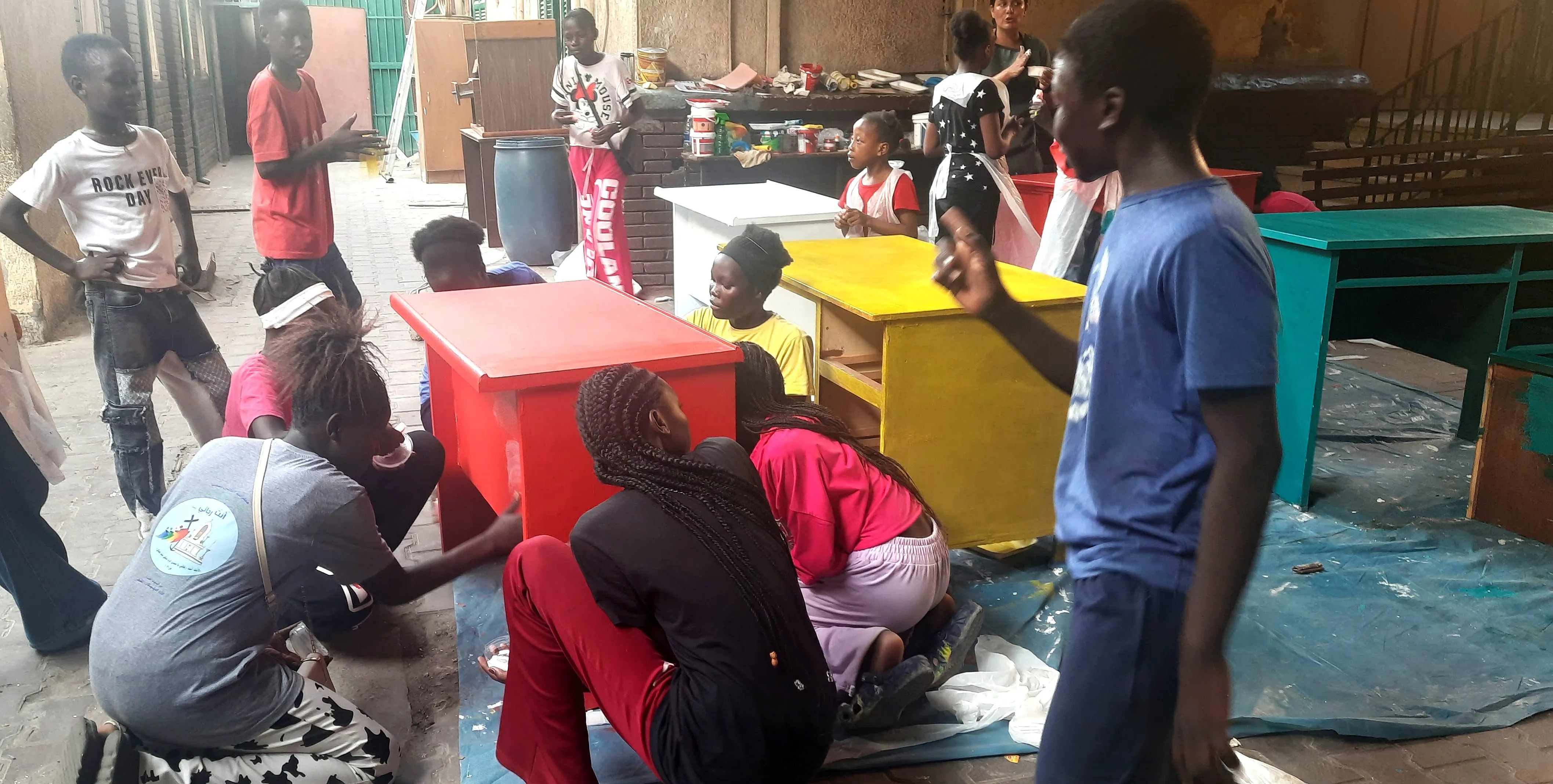
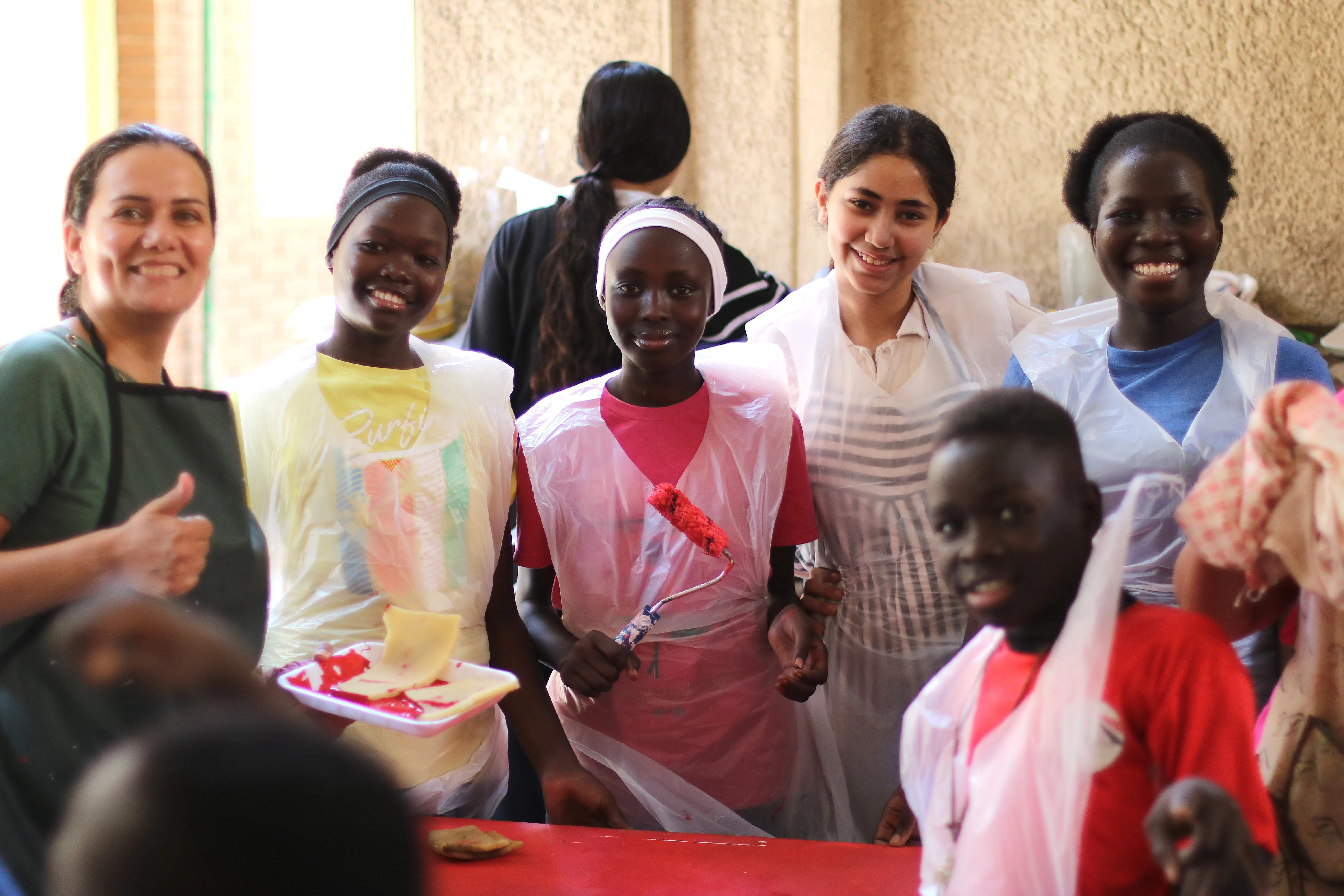
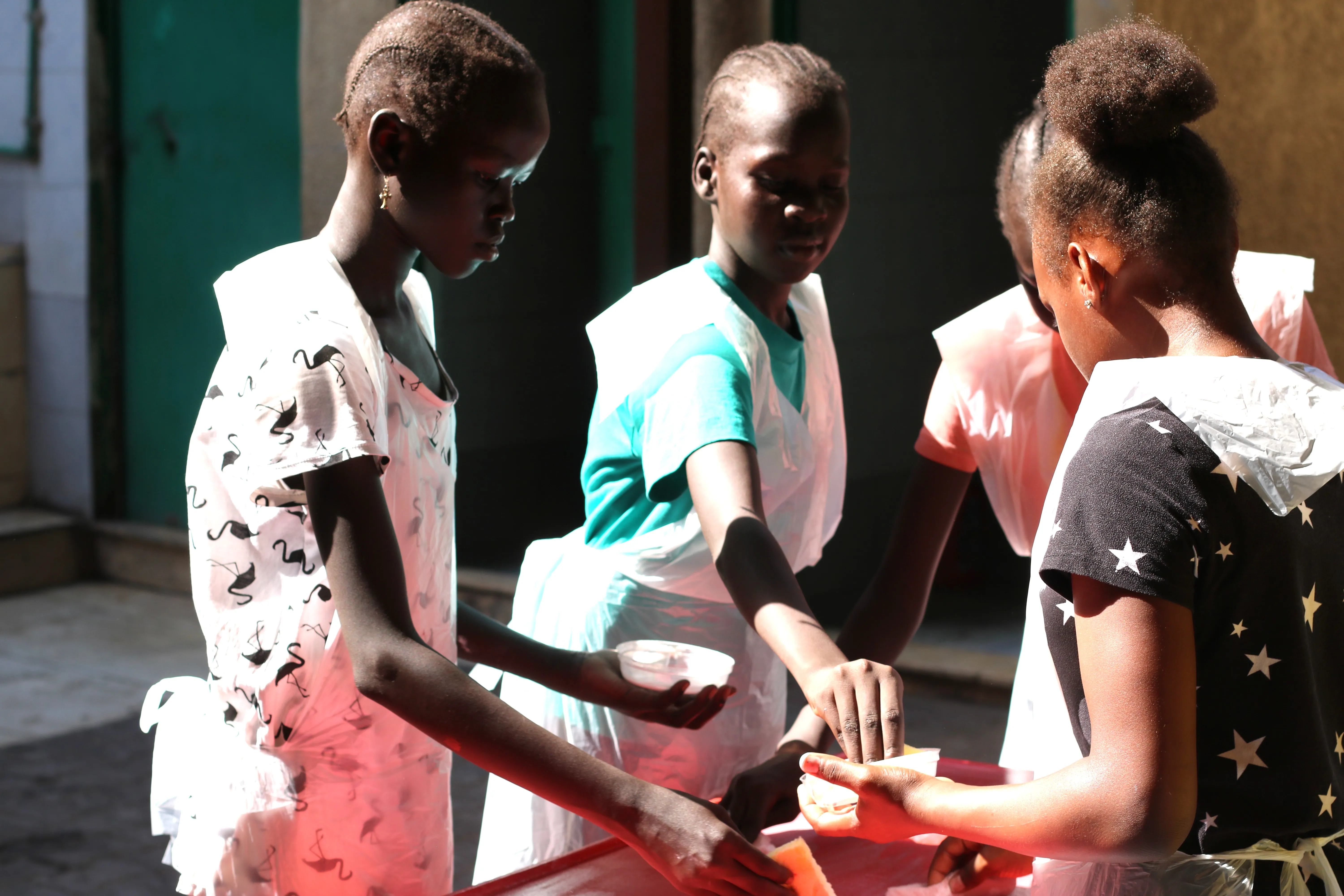
WORKSHOPS „RENEWING OLD SCHOOL-DESKS“
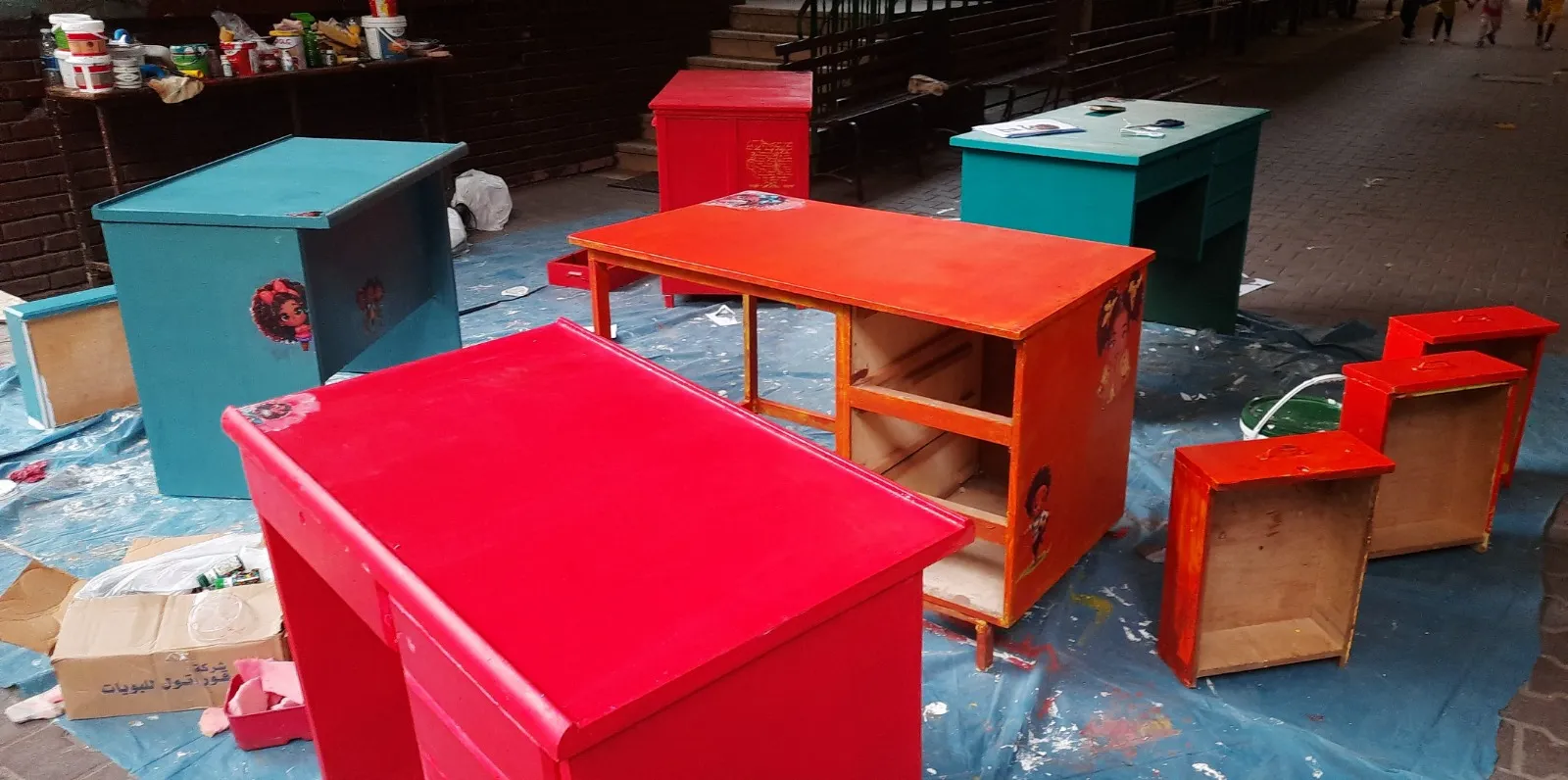
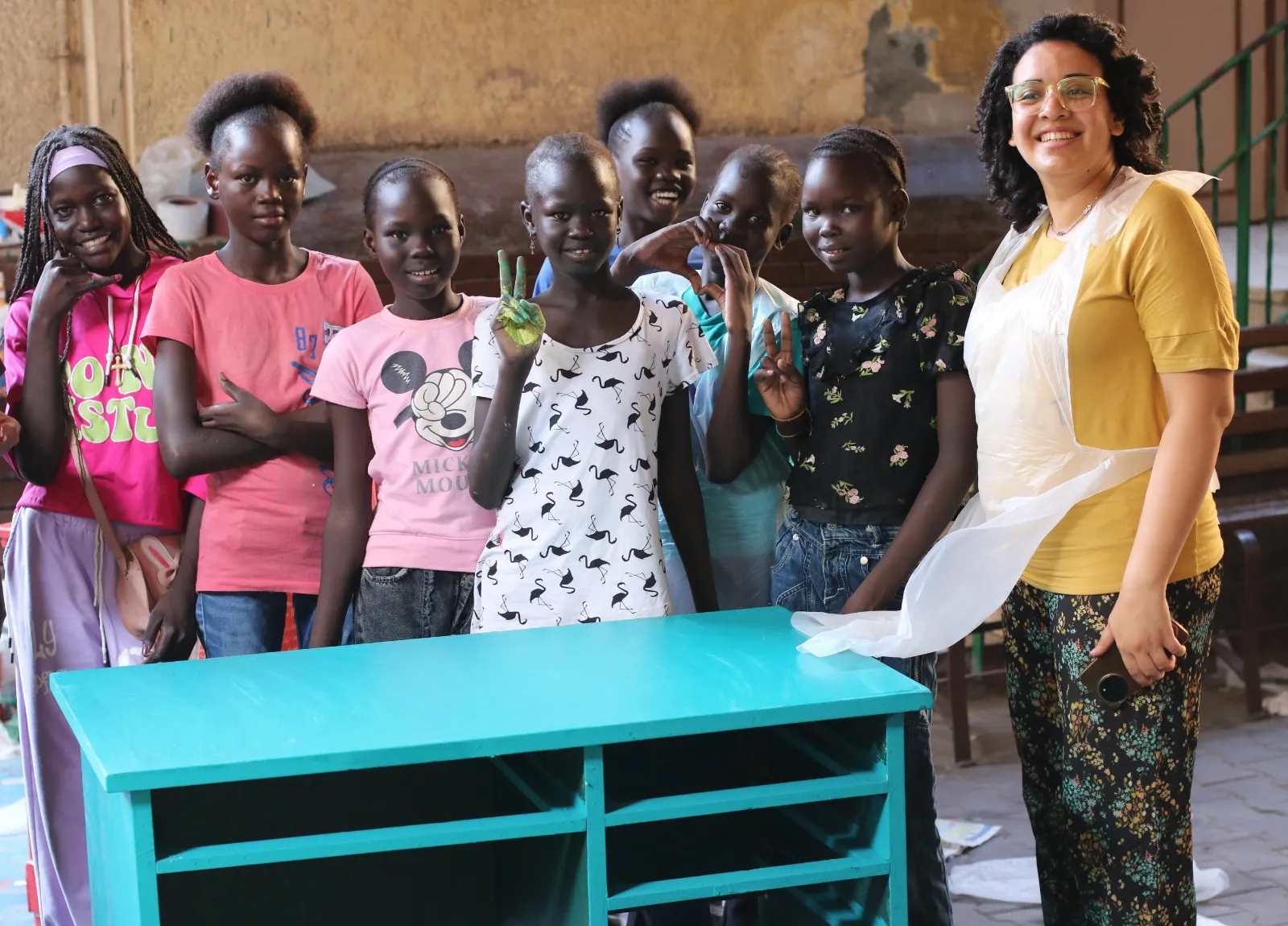
• Let's do something useful for others,’ was the suggestion at the end of the training sessions. Since we were near the Sudanese children's school and saw the old school desks, we immediately had an idea: let's give this old furniture a new look.
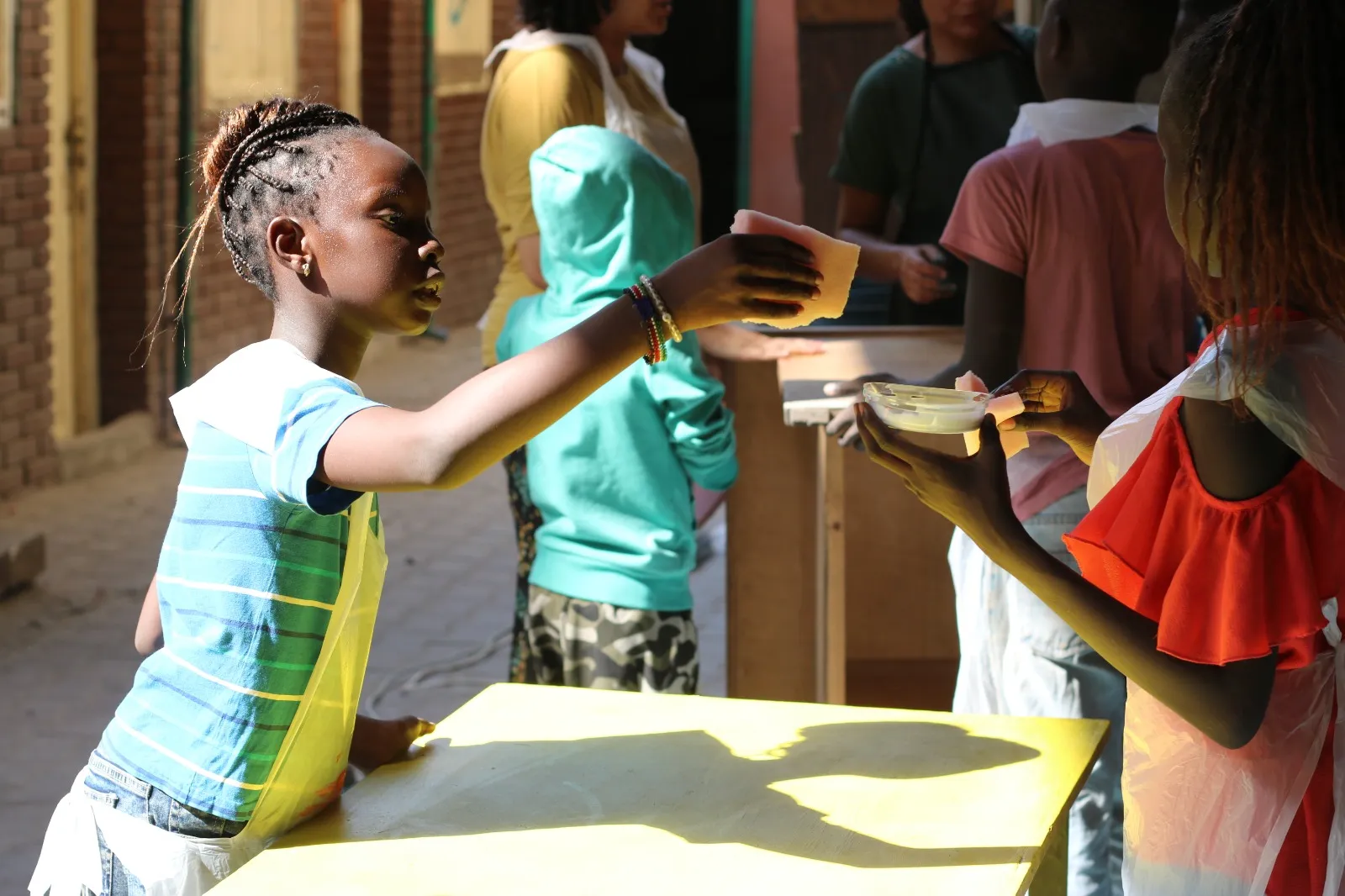
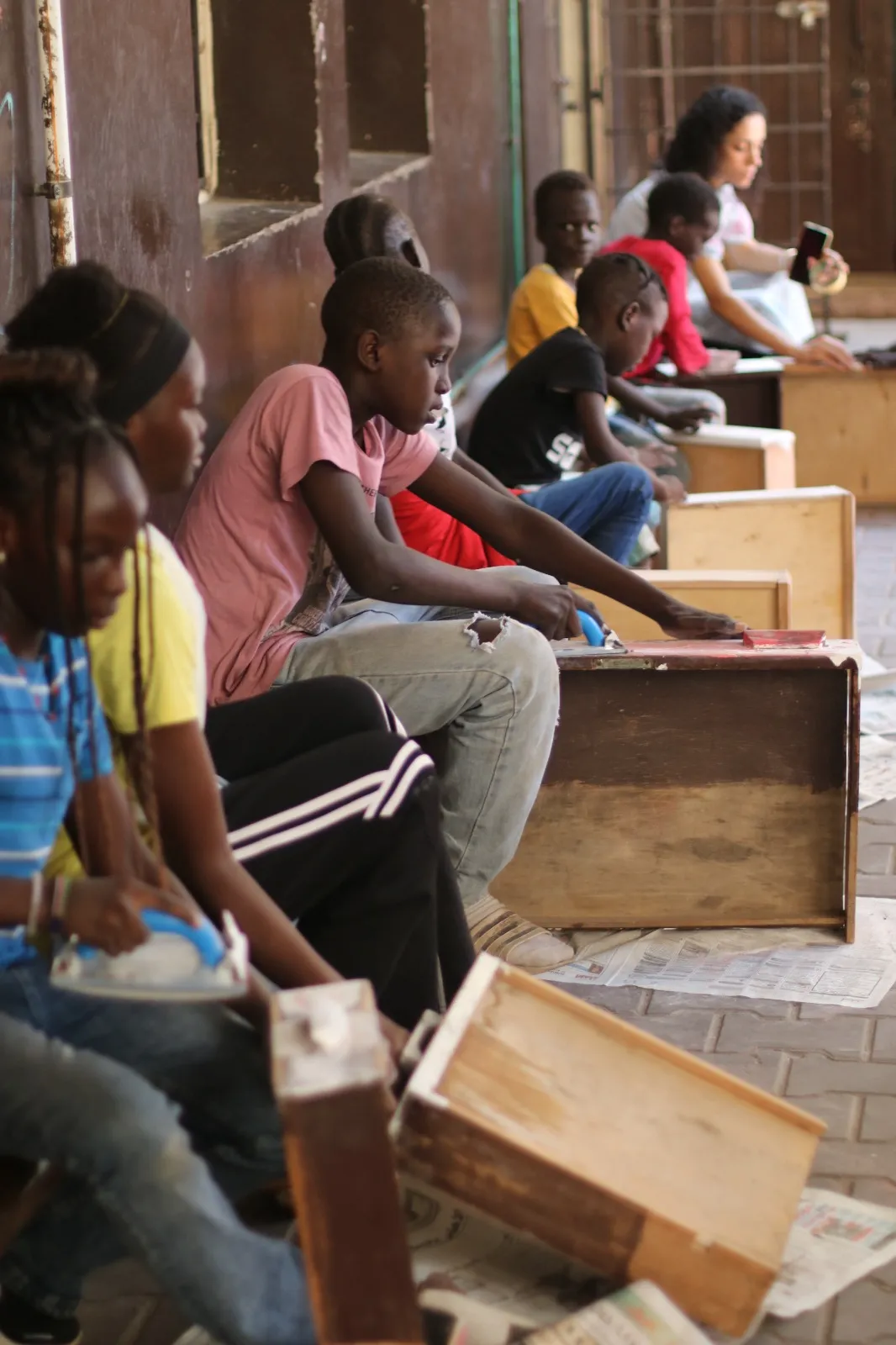
• A specialist trainer brought all the necessary tools, paints, brushes and glue, and a group of 20 people set to work. And since the place where we started working is usually used by some Sudanese children to meet and play, other children joined in and worked with the group as well. Everyone worked enthusiastically; it was the first time any of them had glued, sanded and painted school desks.
•After two sessions, we were done, and the boys and girls proudly showed off what they had created.
Final dissemination event
Final dissemination event
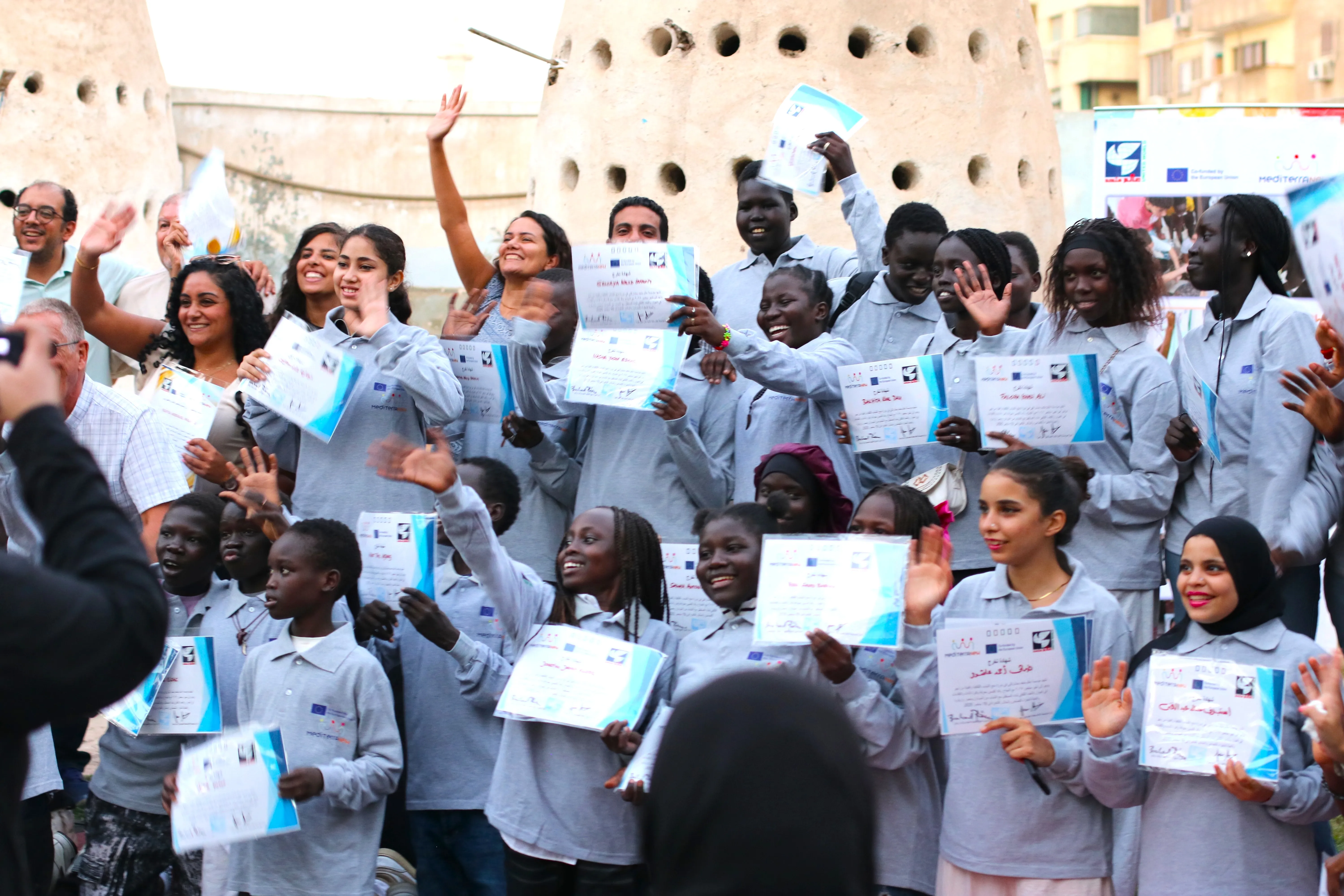
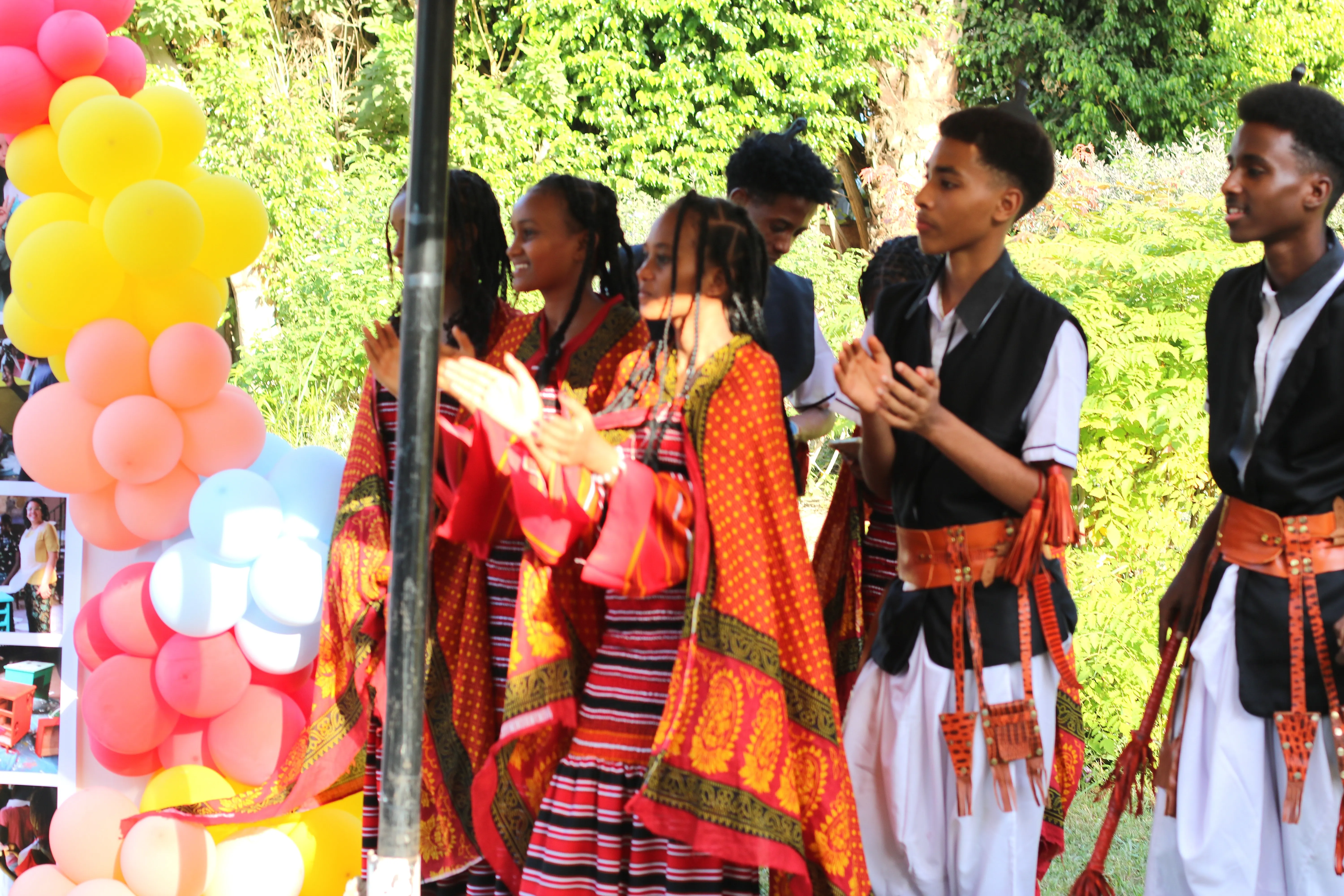
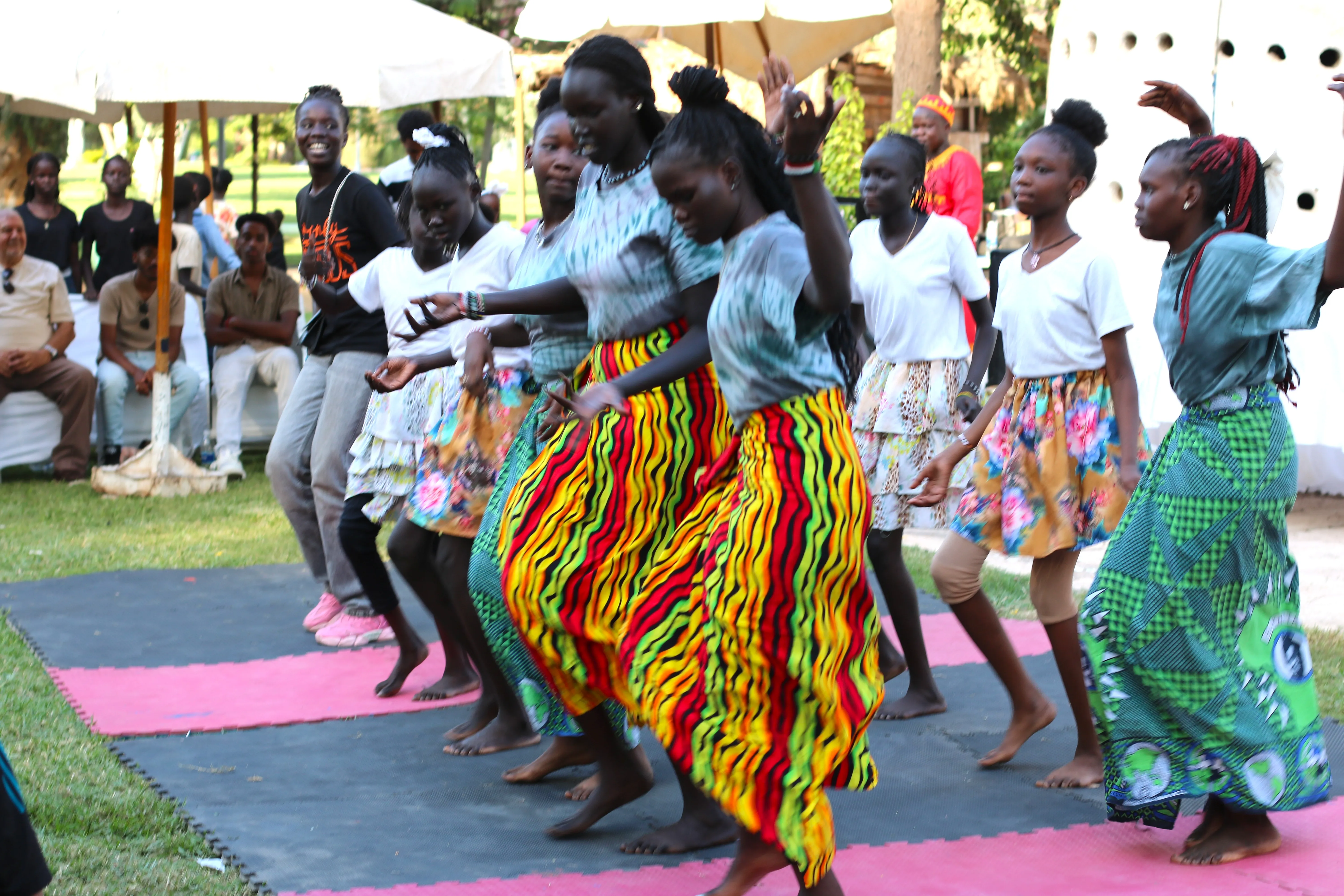
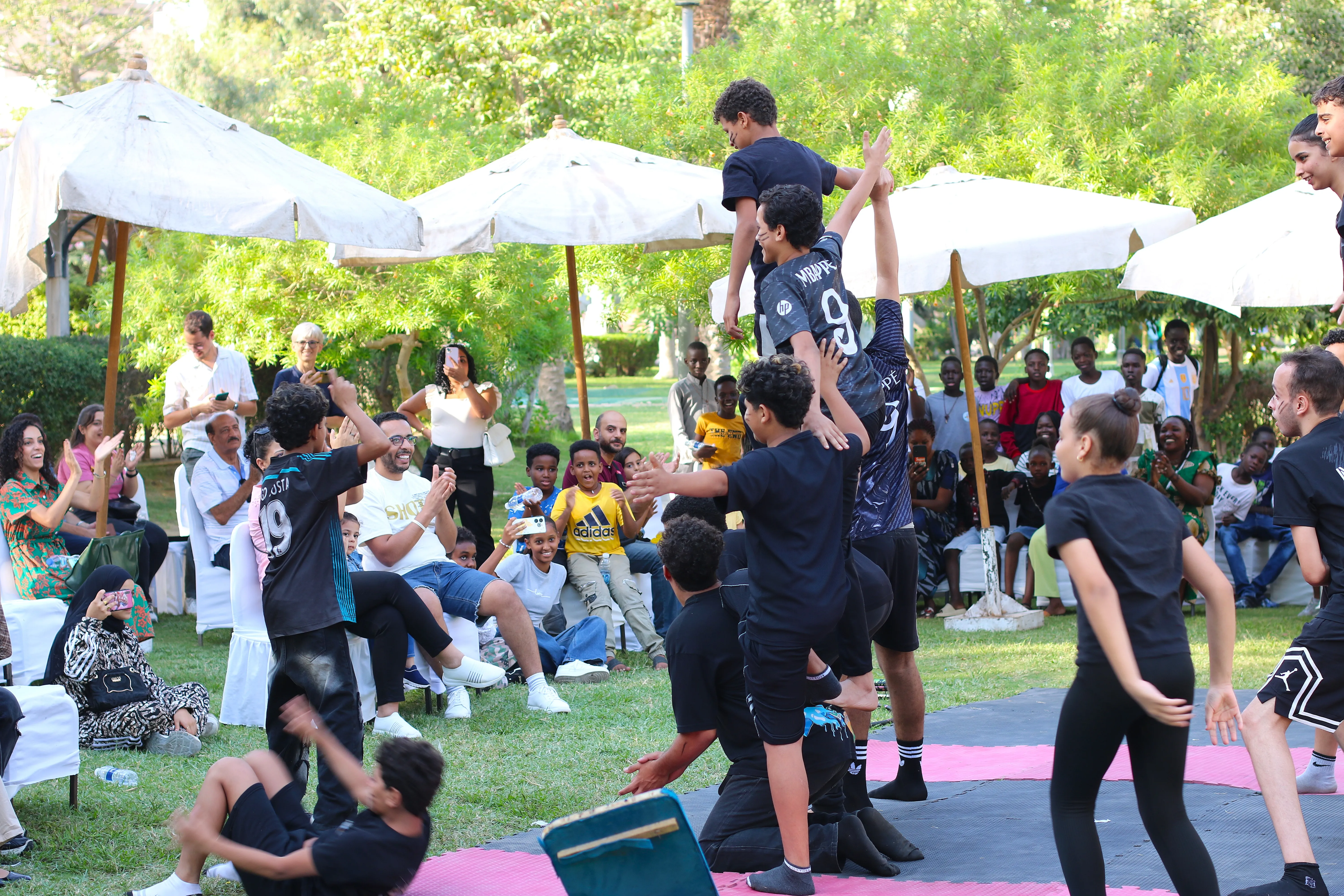
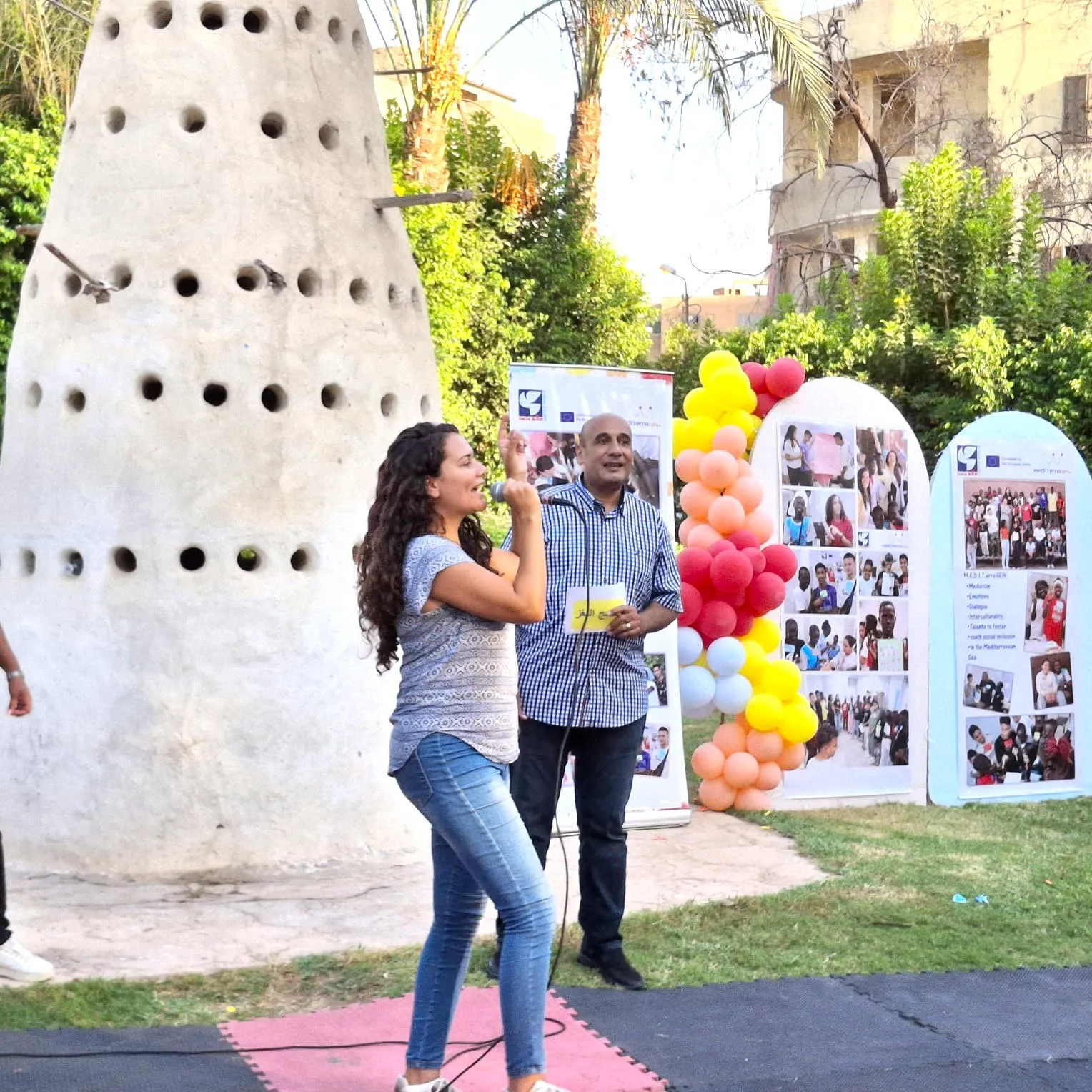
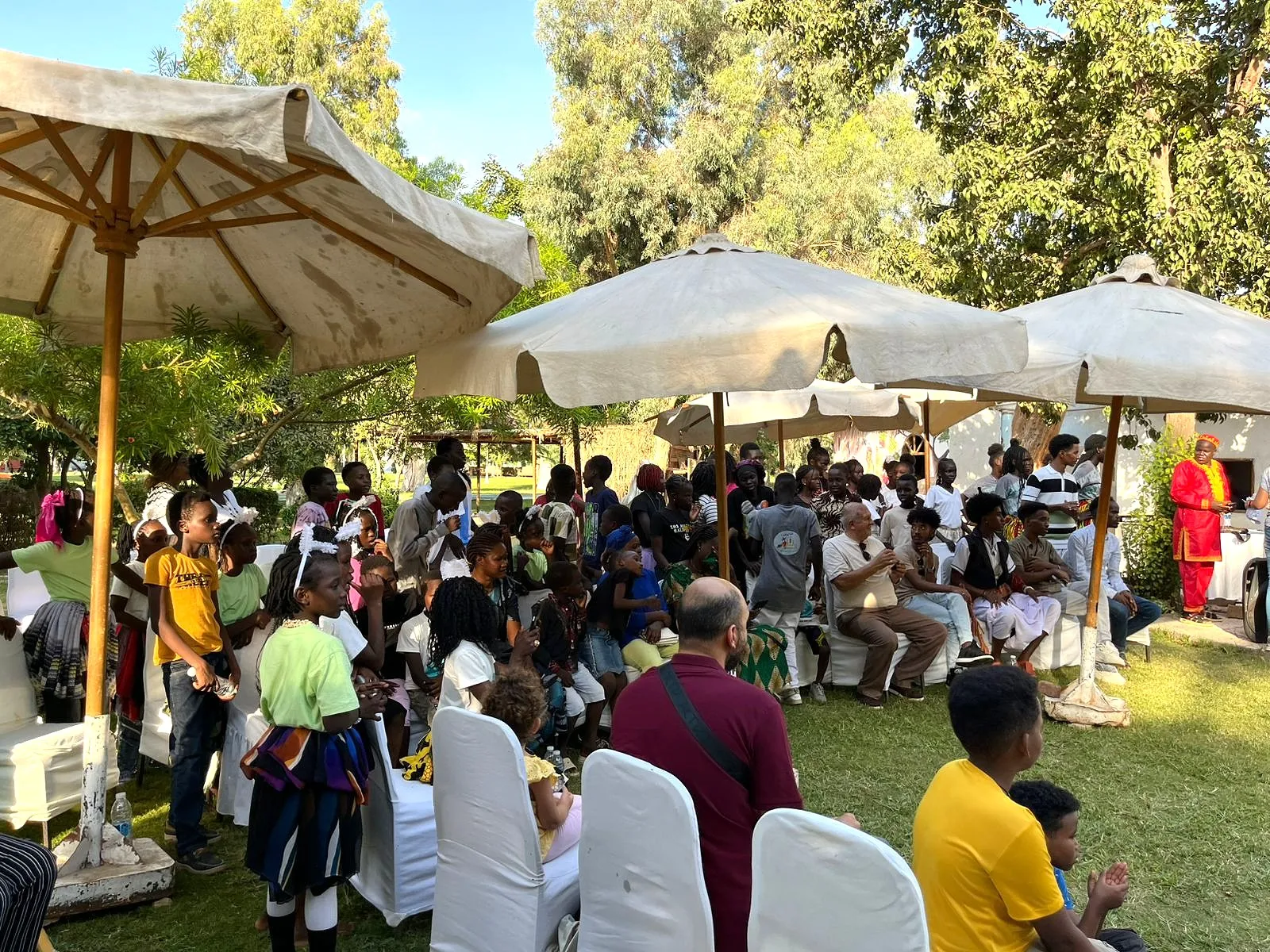
The final information event took place in the park of the Children's Museum in Heliopolis. The aim of the MediterraNEW project was presented to an audience of 200 people: teachers, multipliers, parents, prominent figures, and the young participants in the project. The young participants and trainers reported on their experiences during the three-month program. In addition, each group contributed to the program with typical music, dances, and acrobatic performances. At the end, each participant received a certificate of participation and a T-shirt with the logos of the United World Foundation and the MediterraNEW project.
Young people who were indifferent to each other at the beginning shared the experience of getting to know each other, made friends, broke down prejudices, and learned to understand and appreciate each other's cultures. This is unique and fundamentally important for coexistence in Egypt. We will continue to offer joint events for these young people in the future so that they can stay in touch and have opportunities to continue the experience they have begun.
D. Methodology & Curriculum
PROGETTO M.E.D.I.T.erraNEW – Mediations, Emotions, Dialogue, Interculturality, Talents to foster youth inclusion in the Mare Nostrum. The programme was designed to support personal growth, cultural understanding and social participation among adolescents aged 13–17.
The curriculum "Exploring Personality, Acceptance of Others, and Belonging" focuses on three interlinked pillars: Personality Exploration, Acceptance of Others, and Belonging. Activities are experiential, combining storytelling, arts, group work, and reflective exercises to build confidence and civic skills.
The program was implemented at the Sudanese Refugee School in Sakakini and targeted diverse youth groups. Sessions relied on Kolb's Learning Cycle, Multiple Intelligences theory, and storytelling to engage participants with different learning preferences.
Training Methodology
PROGETTO M.E.D.I.T.erraNEW
Mediations, Emotions, Dialogue, Interculturality, Talents to foster youth inclusion in the Mare Nostrum
TRAINING METHODOLOGY
Name of the training programme:
Personality Exploration, Acceptance of Others, and Belonging
TRAINING FIELDS
1. Linguistic-Intercultural
2. Conflict Mediation, Culture of Peace and Active Citizenship
3. Interfaith Dialogue
4. Personal well-being and affectivity
5. Art and Talents
Field of the Training:
Personal well-being and affectivity – Art and Talents
TARGET GROUP
Boys and girls aged 13 to 17 years
GENERAL DESCRIPTION
Title of the Curriculum: Exploring Personality, Acceptance of Others, and Belonging
This curriculum aims to enhance young people's awareness of themselves and those around them through three interconnected pillars:
• Personality Exploration:
This component helps participants gain deeper self-understanding by identifying the core values that drive their behavior, discovering their unique personal skills and abilities, and reinforcing the importance of having meaning and purpose in life.
• Acceptance of Others:
This pillar addresses the importance of emotions and human relationships, highlights the value of diversity and differences among individuals, and emphasizes respecting others, accepting their differences, and fostering a culture of cooperation as a foundation for living together in a diverse society.
• Belonging:
This section focuses on strengthening participants’ sense of belonging to their homeland and community. It promotes concepts of patriotism, active citizenship, and social responsibility, while stressing that our diversity does not contradict our unity.
The curriculum is implemented at the Sudanese Refugee School in the Sakakini area, targeting 60 boys and girls aged 12 to 18 years.
The program is delivered through regular interactive activities that encourage active participation and the practical application of acquired skills in a safe and supportive environment.
CONTEXT
The program is implemented at the Sudanese Refugee School in the Sakakini area, working with a group of boys and girls from both Egyptian and Sudanese backgrounds. This group faces multiple challenges, including difficult living conditions, limited access to rights and opportunities, and exposure to various forms of social and cultural discrimination.
The program is delivered by a team of volunteers with experience in working with marginalized groups, particularly refugees. They possess skills in psychosocial support and in addressing issues related to diversity and social inclusion.
The program focuses on the participants' self-exploration, offering them opportunities to express themselves and share their experiences. It also aims to create safe spaces that enable them to build positive relationships and strengthen their self-confidence and trust in others.
OBJECTIVES
This program aims to support participants in their journey of self-discovery and to enhance their ability to engage positively with others by achieving the following objectives:
• Strengthening participants' awareness that their true value lies in their humanity, not in their appearance or achievements.
• Enabling participants to identify the core values that form an essential part of their personality and influence their decisions and behavior.
• Helping participants discover their unique personal skills that shape their identity and distinguish them.
• Raising awareness about the importance of healthy human relationships as a key element for success and balance in life.
• Promoting understanding that human diversity and differences are a source of strength and an opportunity for learning and growth.
• Instilling a sense of belonging to one's country and community as part of individual and collective identity.
• Clarifying the importance of setting healthy boundaries in relationships to protect oneself and promote mutual respect.
DEVELOPED SKILLS
• Self-awareness: Participants learn how to better understand themselves, their emotions, and their behaviors.
• Identifying personal values: Participants are able to recognize the core values that are important in their lives and that influence their decisions.
• Discovering life skills: Participants acquire skills that help them in daily life, such as cooperation, communication, and taking responsibility.
• Sense of responsibility toward society: Participants learn about their role in society and how they can contribute in a positive way.
• Dealing with different personalities: Participants practice accepting others, understanding differences, and interacting with respect and empathy.
EU KEY COMPETENCES (2018)
• Linguistic competences
• Personal and social competences
• Citizenship competences
• Creativity, innovation, and initiative
• Cultural awareness and expression
APPROACH
1. Kolb’s Learning Cycle, which includes concrete experience, reflective observation
2. Applying Multiple Intelligences Theory to meet diverse learning needs (linguistic, logical, spatial, musical, kinesthetic, interpersonal, intrapersonal, and naturalistic).
3. Storytelling as an educational methodology is the use of narrative techniques to convey knowledge, values, skills, and experiences in a way that is engaging, memorable, and emotionally impactful. It transforms abstract concepts into relatable, concrete experiences.
METHODOLOGY
The program relies on a set of interactive educational methods that focus on engaging participants and enhancing their ability to express themselves. The main techniques include:
• Storytelling: Used as a tool to open discussions and connect the content to real-life experiences
• Brainstorming: To stimulate creative thinking and encourage the free exchange of ideas.
• Dialogue and Discussion: To share opinions and develop listening and understanding skills.
• Group Work: To promote collaboration and teamwork.
• Open-ended Questions: To encourage critical thinking and self-discovery.
• Artistic and Expressive Activities: Such as drawing or acting, to provide safe and alternative ways to express feelings and thoughts.
Ask ChatGPT
STRATEGIES FOR ACTIVE PARTICIPATION
• Strategies for Active Participation: The program relies on a set of strategies designed to enhance interaction and encourage positive participation from all group members. Key strategies include:
• Creating a psychologically safe environment: A supportive and non-judgmental atmosphere is provided, which encourages participants to freely express their thoughts and emotions.
• Establishing shared group agreements: At the beginning of the program, participants collaboratively agree on a set of rules and values that guide interaction within the group, fostering a sense of responsibility and belonging.
• Using diverse interactive activities: These include open dialogue, group discussions, thought-provoking questions, and brainstorming sessions to encourage all participants to engage and contribute.
• Working in small groups: Dividing participants into small groups increases opportunities for expression and interaction, especially for those who may be hesitant to speak in larger settings.
ROLE OF THE EDUCATOR
• The role of the educator centers on facilitating the learning process rather than delivering knowledge in a traditional, top-down way. Key responsibilities include:
• Asking questions and initiating discussions: To stimulate individual and group thinking and connect the content to participants’ real-life experiences.
• Active listening and guiding dialogue: The educator provides space for participants to share their opinions, respects diversity, and steers the conversation in a way that supports the session’s goals.
• Empowering participants: The educator encourages each individual to take an active role in their learning journey, emphasizing that their role is to support and accompany, not to impose ideas or provide ready-made answers.
PROFILE OF EDUCATORS
The facilitator should ideally have experience working with youth and marginalized groups, with a good understanding of their needs and challenges.
They should possess strong communication skills, be capable of managing discussions, asking thought-provoking questions, and creating a safe space that encourages expression and participation.
Their main role is to facilitate the learning process by supporting and guiding participants in their journey, without directing them or imposing personal opinions.
EDUCATIONAL TOOLS AND MATERIALS USED
The program relies on a variety of tools that support interactive learning and cater to different learning styles, including:
• Short video clips and music
• Paper, pens, and colors
• Pictures and posters
• Question and idea cards
• Various stationery items such as scissors, glue, and pins
• Worksheets and activity guides
• Flipcharts and presentation markers
• Digital tools when needed (such as projectors or interactive applications)
These tools are used according to the nature and objectives of each activity.
STRUCTURE OF THE INTERVENTION
The program consists of two main phases:
• Phase One: Self-Discovery
• Phase Two: Acceptance of Others and Sense of Belonging
Each phase includes three training topics, and each topic is implemented in a separate training day lasting 3 hours, including a short break.
The program targets a group of 30 participants aged 13 to 17, ensuring diversity within the group (in terms of background, gender, and experience) to promote interaction and mutual learning.
Structure of the Training Day
1- Warm-up and Ice-breaking Phase:
Aims to create a safe environment and build rapport among participants.
2- Learning and Exploration Phase:
Includes interactive activities and training content related to the day’s topic and objectives.
3- Evaluation and Closing Phase:
Involves debriefing activities, individual or group evaluations, and sharing impressions and feedback.
Overall Duration of the Intervention
8 training days × 3 hours per day = 24 training hours,
carried out over six sessions spread across a month and a half, implemented during weekends.
CRITICAL ISSUES
1- Hesitation of some participants to engage
At the beginning, some young participants were shy or hesitant to participate.
Solution: Ice-breaking games and simple activities were used to create a safe and comfortable atmosphere that encouraged interaction.
2- Differences in understanding and experience among participants
Not all participants had the same level of knowledge or experience.
Solution: Activities were varied to suit different levels, with simplified explanations and additional support when needed.
3- Different personalities within the group
Some participants tended to dominate the discussion, while others remained silent.
Solution: Participants were divided into small groups to ensure everyone had the chance to speak and participate equally.
4- Late arrivals or absences
This sometimes caused delays in the flow of the sessions.
Solution: The importance of punctuality was emphasized, and regular reminders were sent to participants.
5- Limited resources or appropriate space
There were occasional challenges in securing enough tools or suitable space.
Solution: Materials were prepared in advance, and simple alternatives were used when needed.
DESIGN GUIDELINES
To ensure that this methodology is applicable in different contexts, it is recommended to consider the following essential requirements:
• Design the program for a group with a similar age range to facilitate interaction and communication.
• Prepare all necessary tools and materials in advance before the training sessions begin.
• Focus on interactive and physical activities that enhance engagement and break monotony.
• Organize an opening session to help participants get to know each other and build rapport.
• Conduct a preparatory training for facilitators to ensure they fully understand the methodology and their roles.
• Maintain flexibility in designing and implementing activities to suit participants' different backgrounds and cultures.
• Ensure continuous monitoring and evaluation during implementation to achieve the intended goals and make adjustments when needed.
• Document the entire experience to support future development or to share it with other organizations.
EVALUATION
The program is evaluated through several simple methods that help understand its impact on participants, including:
• Short debriefing sessions after each training day to hear participants’ thoughts and feelings.
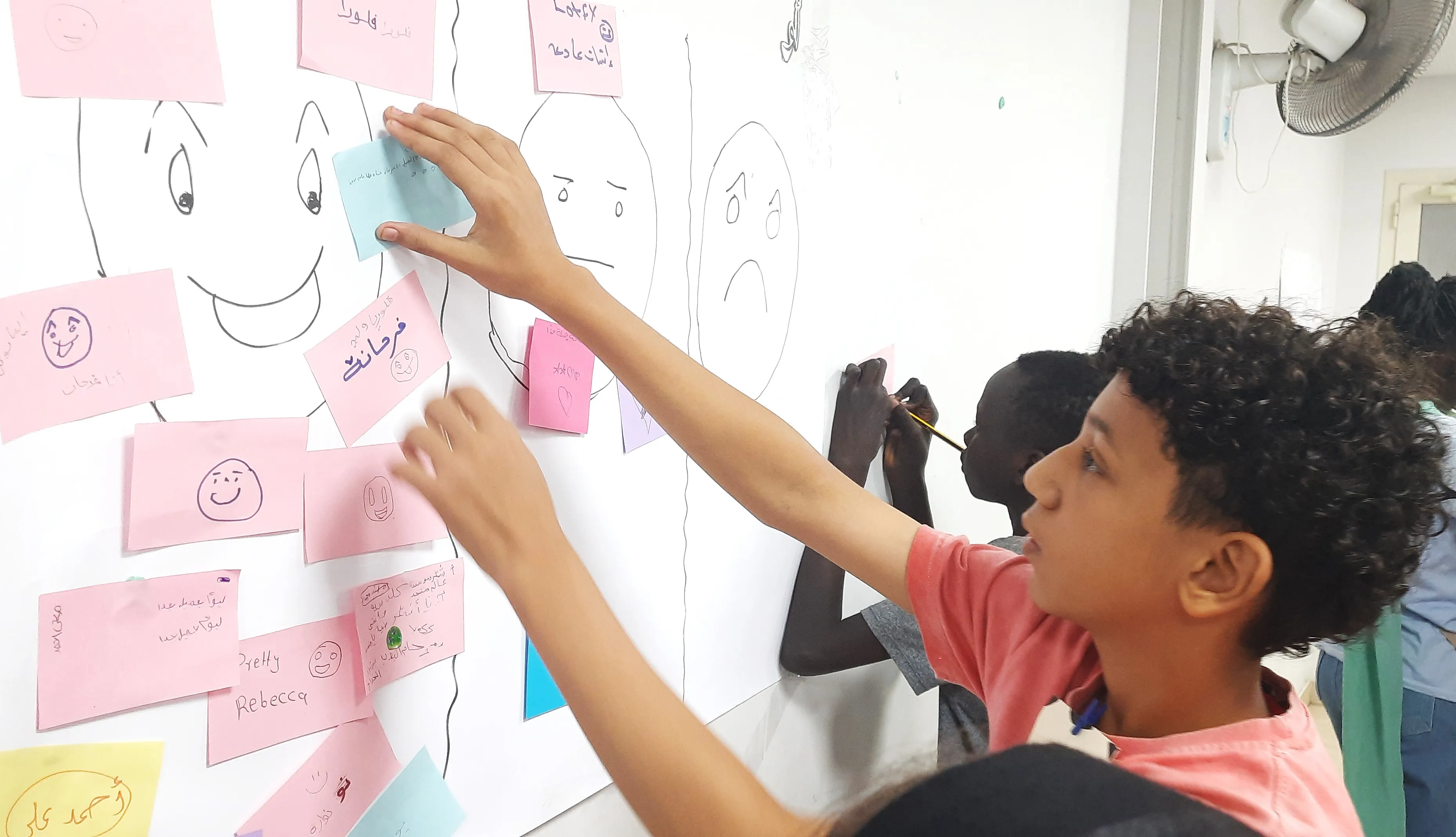
• A feedback wall using emoji faces, where participants can express how they felt after each session.
• Monitoring the number of participants and their level of engagement throughout the program.
• A final evaluation at the end of the program, using a rating scale and a set of questions to understand:
o How much the participants benefited.
o Which topics had the most impact.
o Their suggestions for improving the program in the future.
EXPECTED OUTCOMES
• Enhancing participants’ ability to understand themselves and gain deeper self-awareness.
• Helping participants identify their personal values that guide their decisions and behavior.
• Enabling participants to discover essential life skills needed for effective interaction in their environment.
• Developing a sense of individual and social responsibility towards their community.
• Improving the ability to positively interact with different personalities and embrace diversity.
BIBLIOGRAPHICAL SOURCES OF THE METHODOLOGY
This methodology was developed based on a range of books and theories that address psychological growth, self-awareness, and life skills development. Key sources include:
• “Traits and Standards of Psychological Maturity” by Moshir Samir
• “The Conscious Heart” by Dr. Awsam Wasfi
• “The 7 Habits of Highly Effective People” by Stephen Covey
• “Man's Search for Meaning” by Viktor Frankl
• Holland's RIASEC Model for understanding career interests and choices
• The Motivated Skills Theory by Richard Knowdell
• “On Becoming a Person” by Carl Rogers